
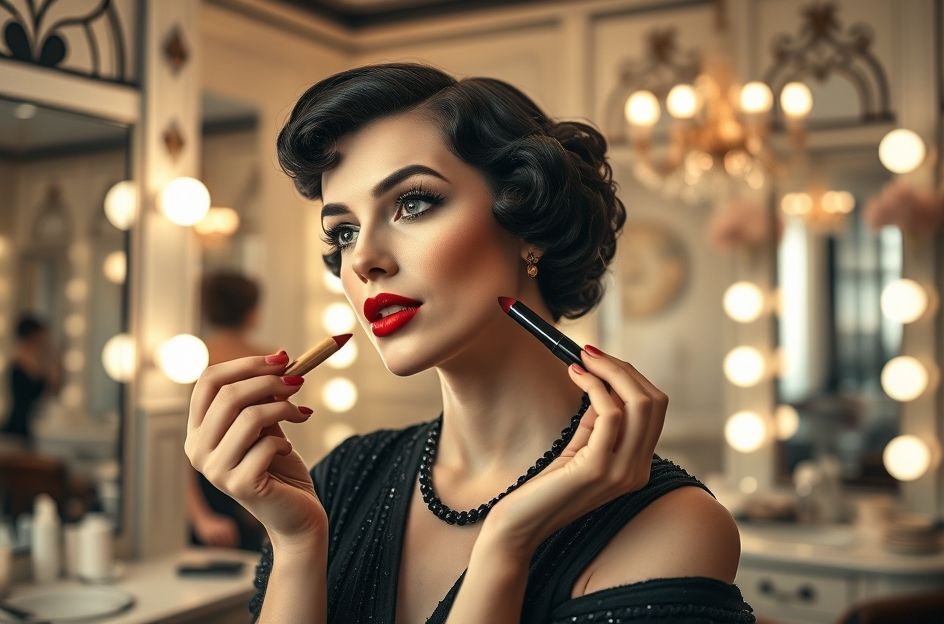
The 20th century witnessed the rise of the modern cosmetics industry. Trailblazers like Mrs. Henning’s House of Cyclax in London, a predecessor to companies like Avon, offered products still recognizable today. Helena Rubinstein expanded her beauty salon offerings, catering to her affluent clientele with sun-protective facial creams, lipsticks, and face powders, eventually establishing a comprehensive cosmetics line.
The popularity of beauty salons soared, and in 1909, Selfridges revolutionized the industry by openly displaying and selling cosmetics over the counter. This shift coincided with evolving attitudes and increasing confidence among women. The arrival of the Russian ballet in London infused artistic influence into design, with Paul Poiret pioneering a vibrant, colorful aesthetic. This era also marked the introduction of permanent cosmetics, allowing women to tattoo lipstick and eyeshadow for lasting effects.
The 1930s favored darker lipstick shades. World War II brought ingredient shortages, leading to a period of simplified makeup routines. However, the end of the war unleashed unprecedented demand for cosmetics. Manufacturers raced to meet the desires of female consumers with a wide array of new products.
Today’s consumers benefit from decades of cosmetic innovation, with an overwhelming selection of products to achieve any desired look. The multi-billion dollar cosmetics industry thrives year-round, proving resilient even during economic downturns.
Therefore, women today owe a debt to their predecessors, whose dedication to personal appearance paved the way for the vast array of cosmetic options now available. Their commitment to beauty, even on days when it felt like a chore, has shaped the modern cosmetics landscape.