
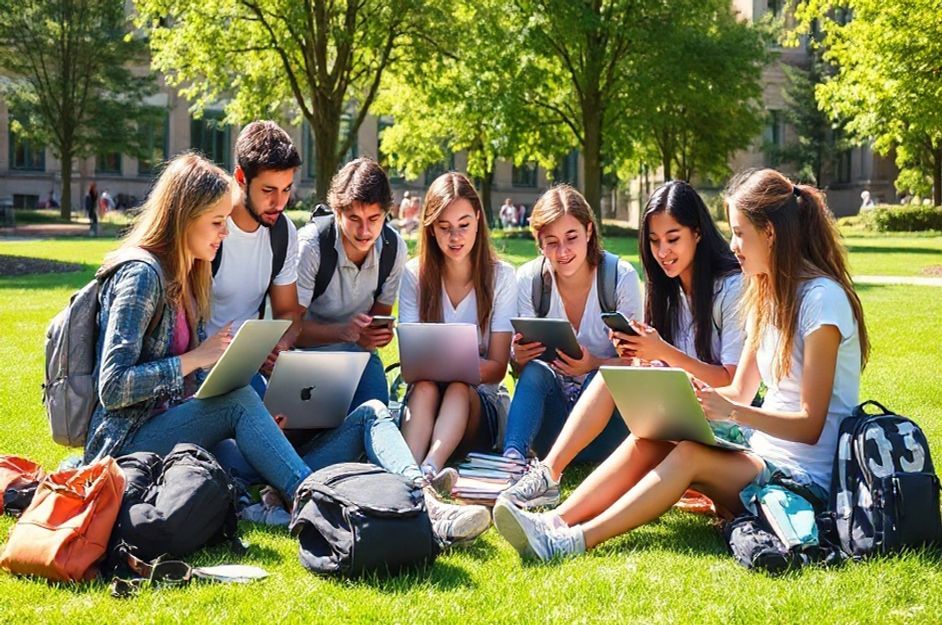
College students are increasingly relying on technology to manage their demanding academic and social lives. According to the National Retail Federation, they spend billions annually on electronics, reflecting the growing sophistication of both the students and the tools they use. Mobile computing has become essential for staying organized and connected.
Handheld devices have replaced traditional paper notes and reference books, offering students a portable and efficient way to manage information. Devices like the Palm TX, with built-in Wi-Fi, allow students to take notes, email professors, and access electronic research materials with ease. When paired with a wireless keyboard, these handhelds provide a more affordable and portable alternative to laptops, supporting tasks like essay writing (using Microsoft Word), homework completion (with Excel), and presentation practice (using PowerPoint).
Smartphones have also become indispensable. The National Retail Federation reports that a vast majority of college students own a cell phone, with a significant percentage using it to access the internet. Students demand feature-rich smartphones for email, instant messaging, web access, Microsoft Office applications, and streaming media. The smartphone market has experienced substantial growth, driven by devices like the Palm Treo.
High-speed networks enable smartphones to offer data speeds comparable to traditional DSL connections. Students can now conduct Google searches, listen to live radio, and stream video content from anywhere on campus. These gadgets empower students to manage their schedules, stay connected, and access information on the go, all from a pocket-sized device.