
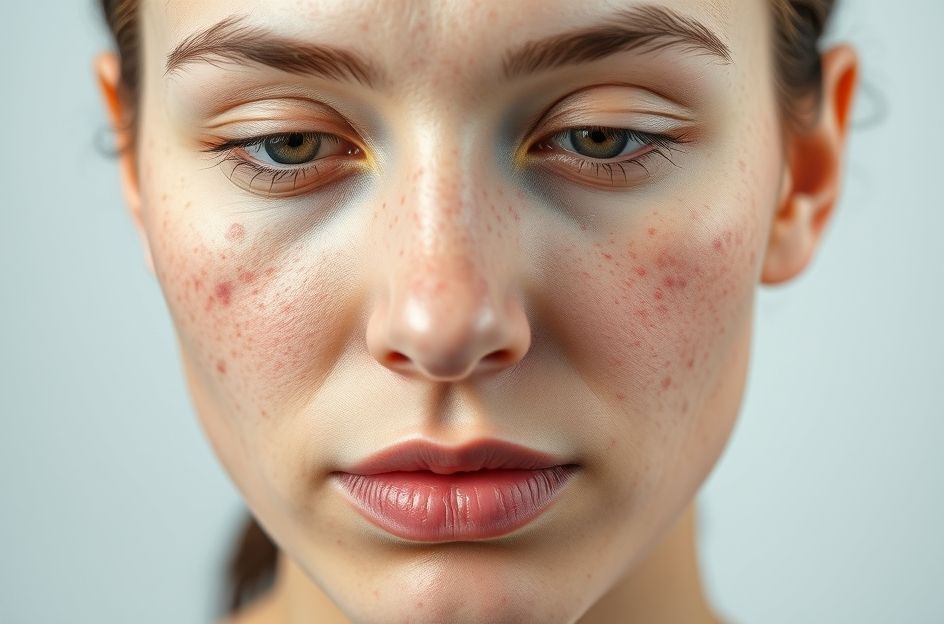
Acne, a common skin condition, manifests in various forms, ranging from mild to severe and appearing on different body parts, most commonly the face. While mild cases often respond to self-treatment, severe acne necessitates professional dermatological care.
Acne vulgaris, or ‘common acne,’ encompasses several types, including blackheads, whiteheads, papules, pustules (pimples or zits), nodules, and cysts.
* **Blackheads:** These occur when pores become partially blocked. Dead skin cells, bacteria, and sebum (an oily substance) accumulate and are exposed to air, causing oxidation and a black appearance. Blackheads can be persistent.
* **Whiteheads:** In this case, the pore is completely blocked, trapping sebum, dead skin cells, and bacteria beneath the skin’s surface.
* **Pustules (Pimples/Zits):** Characterized by a red base and a white or yellow center, pustules are inflamed lesions.
* **Nodules:** Larger and deeper than other acne types, nodules are hard, painful lumps beneath the skin that can persist for months. Due to the high risk of scarring, dermatological treatment is recommended.
* **Cysts:** Similar to nodules, cysts are pus-filled lesions. They are also painful and carry a significant risk of scarring if left untreated, requiring professional intervention.
Less common and more severe forms of acne include:
* **Acne Conglobata:** More prevalent in males, this severe form of acne vulgaris causes disfiguring lesions on the face, chest, back, buttocks, upper arms, and thighs. Numerous blackheads may also be present. Acne conglobata can lead to severe psychological distress, skin damage, and permanent scarring, potentially lasting for years.
* **Acne Fulminans:** A sudden and severe onset of acne conglobata, often accompanied by fever and joint pain. Treatment typically involves oral steroids.
* **Gram-Negative Folliculitis:** This bacterial infection results in pustules and cysts and can be triggered by prolonged antibiotic use for acne treatment.
* **Pyoderma Faciale:** Primarily affecting women between 20 and 40, often with no prior history of acne, pyoderma faciale presents as painful pustules, cysts, and nodules on the face. Permanent scarring is a potential complication. The condition usually resolves within a year.
* **Acne Rosacea:** Typically affecting individuals over 30, acne rosacea causes a red rash on the face, sometimes accompanied by pimples or other blemishes. It’s crucial to distinguish it from acne vulgaris, as the treatments differ. Acne rosacea is more common in women, but tends to be more severe in affected men.