
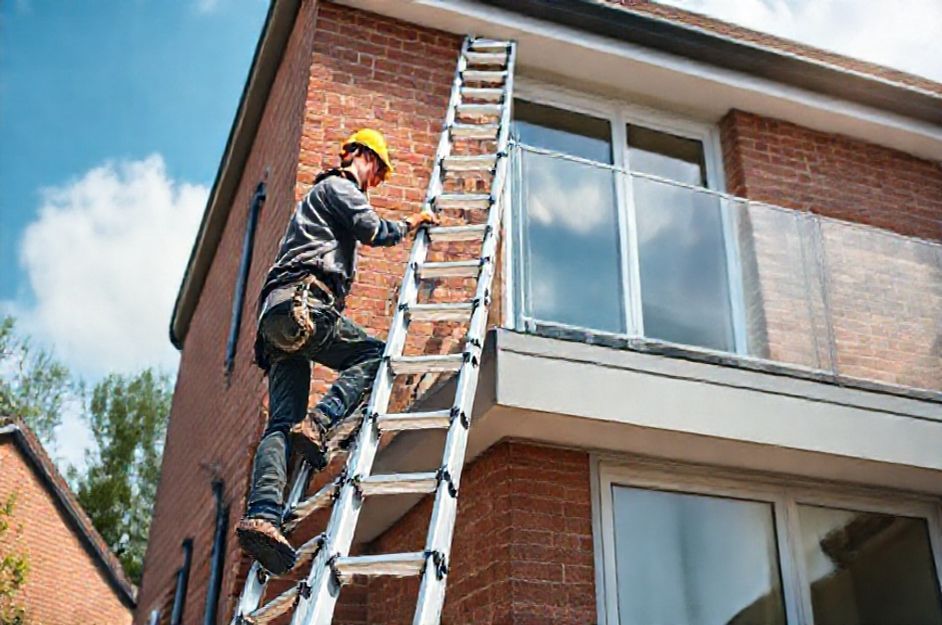
Ladders are essential tools, facilitating access to elevated areas in various settings. They primarily come in two forms: rigid ladders, designed to lean against vertical surfaces, and rope ladders, which are suspended from above.
Rigid ladders consist of rungs (the steps) and stiles (the vertical supports). While agility allows for sliding down the stiles, it’s generally safer to descend using the rungs. These ladders are typically portable and come in several types:
* **Fixed Ladders:** Simple designs with two stiles connected by rungs.
* **Extension Ladders:** Ladders that can be extended or retracted for adjustable length.
* **Step Ladders:** Self-supporting ladders with a hinged design, forming an inverted V-shape.
* **Roof Ladders:** Equipped with a hook to secure onto a roof’s ridge.
* **Hook Ladders:** Feature a hook at the top for attachment to windowsills, commonly used by firefighters.
Historically, rigid ladders were constructed from wood. However, aluminum became prevalent in the 20th century due to its lighter weight. Fiberglass stiles are used in ladders designed for electrical work, as fiberglass offers insulation and enhances worker safety.
For safe usage, position a rigid ladder at approximately a 75-degree angle. A simple rule of thumb is to ensure the base of the ladder is no more than one-quarter of the ladder’s height away from the wall. Steeper angles increase the risk of backward falls, while shallower angles can cause slippage. Ladder stabilizers can improve grip and stability.
Rope ladders are favored when storage space is limited or minimal weight is crucial. Their rungs can be rigid or flexible. Climbing rope ladders demands more skill due to their tendency to swing. While less common than rigid ladders, they find applications in obstacle courses and military operations.
In summary, ladders are indispensable tools that simplify numerous tasks. Their importance in everyday life and various industries cannot be overstated.