
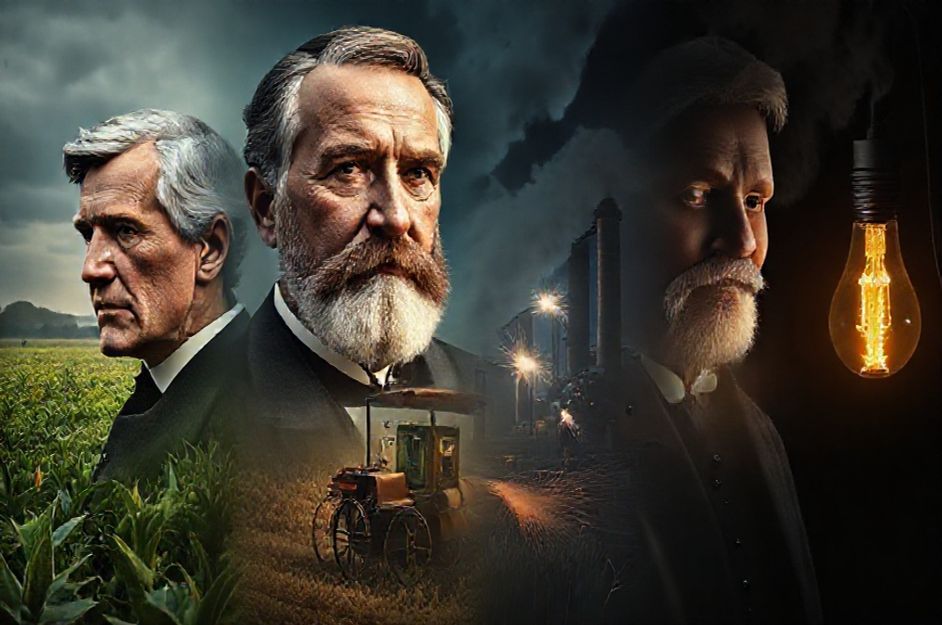
Throughout history, certain individuals have risen to prominence not through inherent greatness, but through extraordinary achievements that have reshaped the business landscape. These individuals dedicated their lives to achieving their dreams, leaving a lasting impact on society. This article examines the lives and accomplishments of several such figures who revolutionized the business world, leaving a legacy that continues to benefit millions.
**Washington Duke (1820-1905): The Tobacco Pioneer**
Washington Duke’s life was marked by hardship. The North Carolina farmer endured the loss of his wife and son to illness, compounded by the failure of his cotton crop. His resilience was further tested when he became a prisoner of war during the Civil War. However, Duke’s fortunes changed dramatically when he began manufacturing tobacco. His product, initially known as ‘Pro Bono Publico,’ gained immense popularity among Union Army soldiers stationed in North Carolina. Duke later expanded his business with W. Duke, Sons and Company, a successful cigarette manufacturer, solidifying his place as a leading tobacco industrialist.
**Cyrus McCormick (1809-1884): The Reaper’s Innovator**
Cyrus McCormick, the inventor of the reaper, holds a distinguished position in business history. Inspired by his blacksmith father’s contributions to agricultural technology in the Shenandoah Valley, McCormick refined and popularized the reaping machine. His invention achieved widespread success both domestically and internationally. In 1847, McCormick established the McCormick Harvesting Machine Company in Chicago, which thrived despite intense competition. McCormick’s reaper significantly reduced the labor and time required for grain production. Harvesting an acre of wheat, which took 20 hours in 1830, was reduced to just one hour by 1895, a testament to McCormick’s ingenuity.
**Andrew Carnegie (1835-1919): The Steel Magnate and Philanthropist**
Andrew Carnegie’s life is a classic rags-to-riches story. Overcoming childhood poverty, he worked as a bobbin boy, telegrapher, and superintendent for the Pennsylvania Railroad. Investing his savings in oil, iron, and steel during the Civil War proved to be a turning point. By 1880, Carnegie consolidated numerous companies under the Carnegie Steel Company, which by 1900 produced a quarter of all steel in the United States. Believing that wealthy individuals should act as trustees of their wealth for the benefit of the public, Carnegie became a renowned philanthropist.
**Thomas Edison (1847-1931): The Wizard of Menlo Park**
Thomas Edison, a name synonymous with innovation, holds a revered place in history. Credited with over 1,100 inventions, Edison’s impact on modern life is undeniable. Despite limited formal education, he worked as a railroad newsboy and pioneered the first publication typeset and printed on a moving train. Edison’s prolific inventions include an electronic vote recorder (1868), the quadruplex telegraph (1874), the phonograph, the light bulb, and the Dictaphone. While some inventions were improvements on existing technologies or collaborative efforts, Edison’s guidance and entrepreneurial spirit were crucial. He also founded a company that later became General Electric.
These men, along with others like George Eastman, Henry Ford, Madam C.J. Walker, and Joseph Pulitzer, made significant contributions that have greatly benefited humanity.