
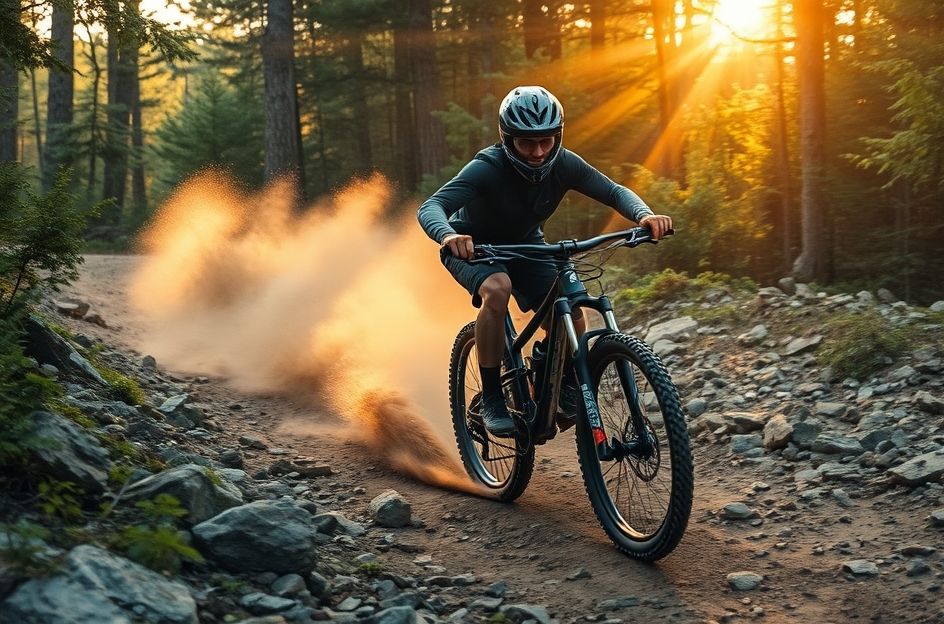
Choosing the right mountain bike depends entirely on your riding style and intended use. A leisurely ride along a canal path or a gentle jaunt in the woods doesn’t require a full-suspension downhill machine. This guide breaks down what to consider at each level, from beginner bikes to professional-grade equipment.
**Getting Started:**
For casual park rides, affordability is key. Off-road riding might necessitate tires with more substantial treads. If you anticipate tackling rougher terrain, suspension becomes essential. Expect Shimano gears and potentially V-brakes from various manufacturers. The remaining components depend on your budget. Explore local bike shops or online retailers to compare options and prices.
**Stepping It Up:**
For adventurous riders seeking forest trails and challenging terrain, a lighter bike with suspension forks is a worthwhile investment. Improved handling and reduced weight will make uphill climbs easier and downhill descents more enjoyable. Shimano components remain standard, with quality dictated by budget. Look for V-brakes, rapid-fire gear shifters, and a Shimano chainset, bottom bracket, and headset. Alloy handlebars, stem, and seat post, along with a comfortable saddle, will prepare you for the trails.
**Race-Ready Bikes:**
For those aspiring to race, numerous options exist. Research manufacturers like Trek, Giant, Specialized, and Cannondale, known for their high-quality frames and components. Gears will likely be Shimano or SRAM, and brakes may be V-brakes or cable disc brakes. Wheelsets typically feature Shimano hubs and Mavic rims. Suspension fork choices include Suntour, Marzocchi, Manitou, Fox, RockShox, and RST.
**Professional-Grade Bikes:**
Professional-level mountain bikes allow for customized builds. Top frame brands include Klein, Scott, Rocky Mountain, Gary Fisher, Santa Cruz, and K2. RockShox SID forks are a popular choice. Gears are typically SRAM or Shimano Rapid Fire XT or XTR. Hydraulic disc brakes from Hayes, Pace, or Magura are common, or V-brakes remain a reliable option. Wheel choices range from Shimano or Mavic to lightweight carbon options. Carbon handlebars, stems, and seat posts, combined with a lightweight race saddle and clipless pedals, complete the setup. Tire selection depends on the terrain and conditions.
**Downhill Bikes:**
Downhill bikes resemble motocross bikes, featuring a low center of gravity and significant suspension travel. Disc brakes, wide rims, and fat tires are standard. A single chainset is typical, with gears only at the rear. Due to their heavy weight, downhill bikes are best suited for dedicated downhill courses with lifts or tow ropes.