
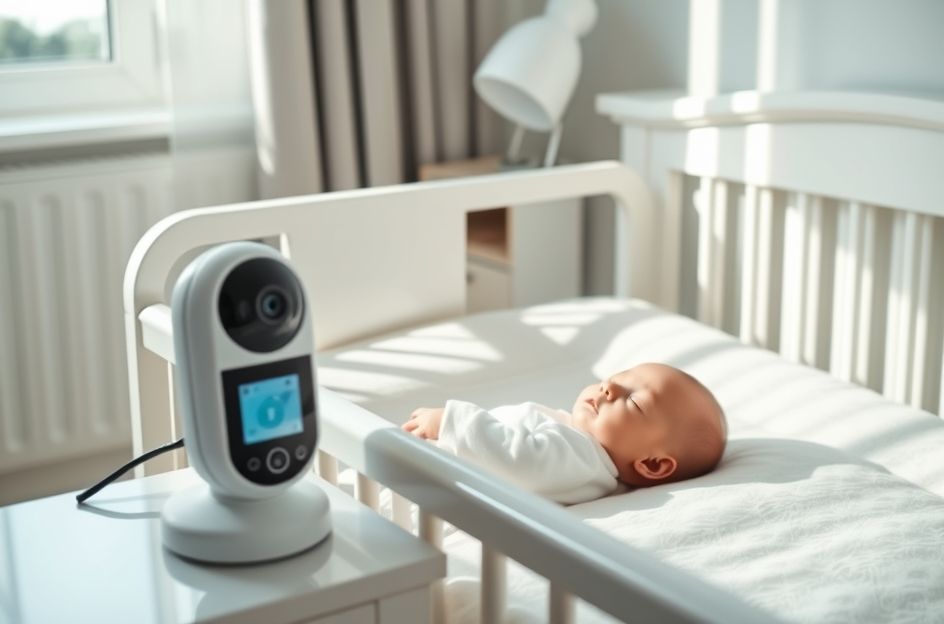
Baby monitors are an indispensable piece of baby gear, providing parents with peace of mind while their little one sleeps soundly in the crib. Instead of constant, anxious check-ins, a baby monitor allows you to keep a watchful ear (and eye, with video models) from another room.
The ideal placement for the monitor’s transmitter is within 10 feet of the baby. A nightstand near the crib is perfect, but ensure it’s out of the baby’s reach as they grow. The receiver unit can be carried around or kept plugged in by your bedside. Basic models feature simple on/off and volume controls, while battery operation offers portability.
Advanced baby monitors offer features like light displays that flash when the baby cries, eliminating the need for high volume. Video monitors, equipped with a camera, allow you to visually check on your baby. Some can even be connected to recording devices.
However, be aware of potential drawbacks. Baby monitors can pick up cordless phone conversations or even sounds from the same room. Interference can occur; in rare cases, you might even pick up signals from a neighbor’s monitor on the same frequency. Safety is paramount: always keep monitors away from water sources like bathtubs and pools.
In conclusion, a baby monitor is an invaluable tool, offering reassurance and enabling you to attend to other tasks while your baby sleeps. However, a monitor is never a substitute for responsible parental care. Always check on your baby regularly, even when using a monitor, and never leave them unattended for extended periods.