
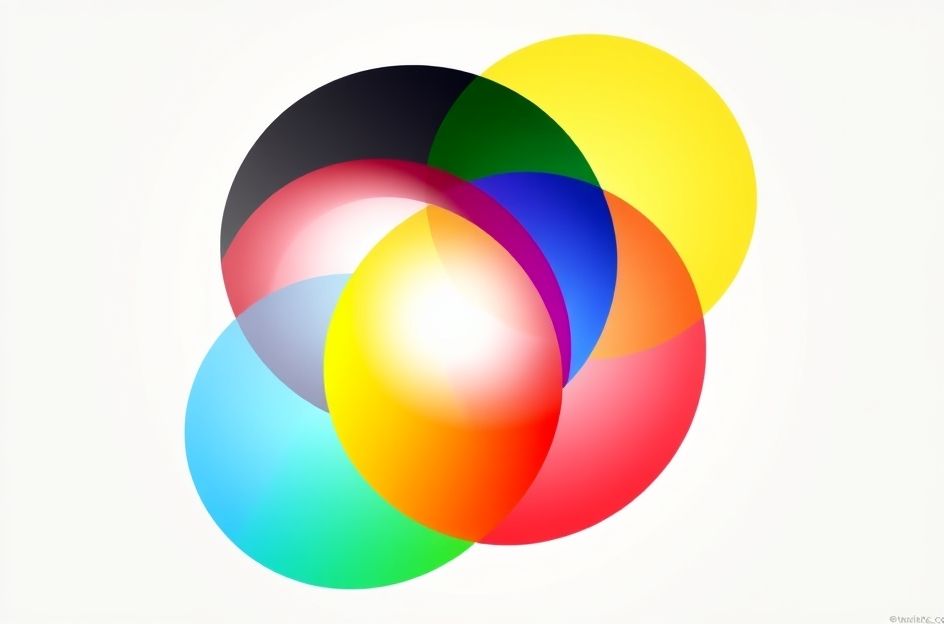
Color wields immense power, capable of influencing emotions, driving motivation, sparking inspiration, and deeply resonating with individuals. Consequently, grasping the fundamentals of color is essential for fostering effective communication and building strong relationships. Furthermore, businesses recognize the significance of color in enhancing their brand appeal and boosting sales.
Color finds applications across diverse fields. Here are several notable examples:
1. **Commercial Printing:** Within the commercial printing sector, encompassing both traditional offset methods and online printing services, color plays a pivotal role in determining the overall quality and impact of printed materials. Printing companies commonly employ four-color printing (CMYK), two-color printing, and the Pantone Matching System (PMS).
* **Four-Color Printing (CMYK):** Also known as full-color printing, this process creates a wide spectrum of colors by combining cyan, magenta, yellow, and black inks. Instead of physically blending the inks, the CMYK process simulates a range of colors to achieve the desired result.
* **Two-Color Printing:** This cost-effective method utilizes only two colors, making it suitable for printing logos or postcards with a limited color palette.
* **Pantone Matching System (PMS):** PMS offers a standardized color system for achieving precise color matching. Ideal for ensuring brand consistency, PMS allows for the creation of custom ink mixes to meet specific color requirements. However, it may be more expensive than other printing methods.
2. **Computer Monitors:** Computer monitors generate colors using three primary colors: red, green, and blue (RGB). By varying the intensity of these colors, a wide array of hues can be produced. Each base color ranges from 0 (no light emission) to 255 (full light emission).
Computer monitors can also convert RGB colors to CMYK to ensure that colors displayed on the screen closely match the final printed output.
3. **Paints:** Industrial paints rely on specific colors to complement architectural fixtures and designs. The Pantone Matching System is commonly used to accurately match paint colors, ensuring consistency and visual harmony.
4. **Desktop Printers:** Desktop printers typically employ the four-color printing system (CMYK) to reproduce colors in documents, images, and graphics. However, it’s important to note that colors displayed on a computer monitor (using the RGB system) may not always perfectly match the printed output.
With a deeper understanding of color principles, you can now confidently make informed choices about your color preferences. Best of luck!