
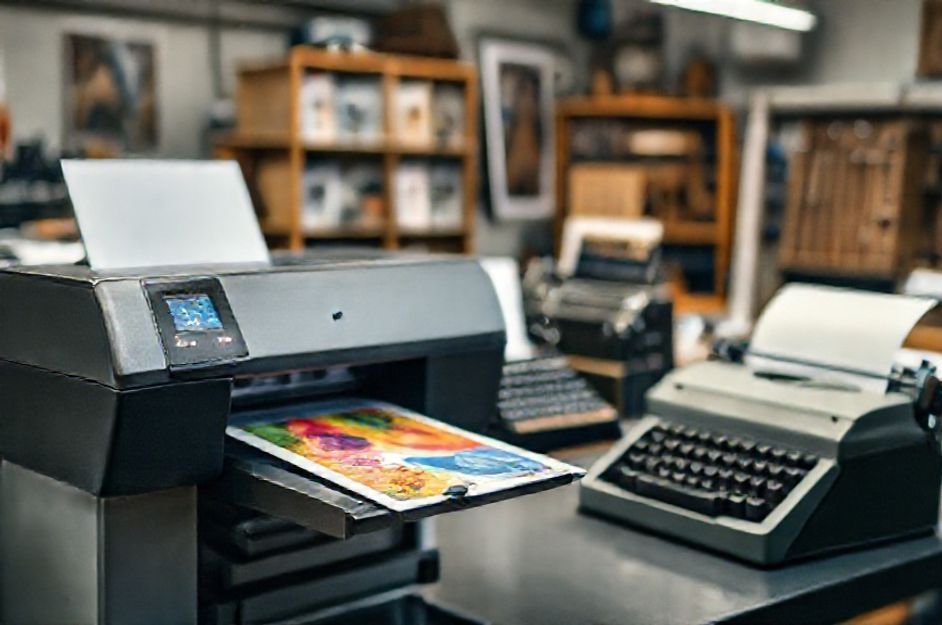
From the rudimentary methods of ancient lithography, where prints were painstakingly created by hand, the world of printing has undergone a dramatic transformation. Each innovation has built upon the last, revolutionizing how we disseminate information and express creativity.
The invention of the typewriter marked a pivotal moment. Though manually operated, it offered a significant leap in efficiency and legibility compared to handwriting, streamlining communication and document creation.
Next came the photocopier, pioneered by Xerox. This innovation democratized access to information by enabling the rapid and affordable reproduction of documents. The Xerox machine transformed offices and libraries, making duplication simple and readily available to all.
Printing presses further modernized the process, mechanizing what was once the laborious task of lithography. These machines allowed for faster and more accurate production of large print runs, accelerating the spread of knowledge and culture.
The advent of the computer revolutionized printing once again. With user-friendly interfaces, advanced software, and high-quality printers, creating and reproducing documents became incredibly efficient. The ability to easily correct errors and produce countless copies with a single click ushered in the era of digital wholesale printing.
Digital wholesale printing streamlines the production of large quantities of printed materials. Its digital nature ensures speed and precision, leading to quicker turnaround times for businesses and individuals alike.
Today, printing has evolved from simple black and white reproductions to vibrant, colorful works of art. Digital technologies offer unparalleled speed, efficiency, and quality. Inks are more durable, and the possibilities are endless.
As technology continues to advance, we can only imagine what future innovations await. For now, let’s appreciate the remarkable progress that has brought us to this point.