
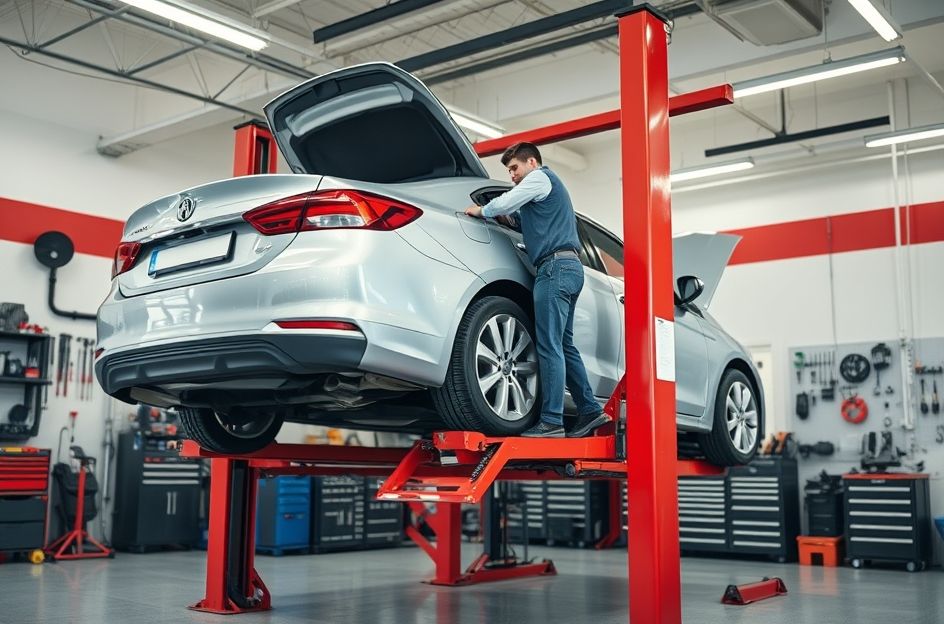
Choosing the right two-post vehicle lift is crucial for any automotive shop. Understanding the differences between symmetric and asymmetric lifts ensures you select the best option for your needs. Let’s explore these types and their pros and cons.
**Symmetric Lifts:**
Thirty years ago, symmetric lifts were the standard, designed for rear-wheel-drive vehicles with balanced weight distribution. Columns are positioned opposite each other with equal arm lengths, balancing the vehicle between the front and back. While robust, a significant drawback emerged: the columns’ proximity to the vehicle’s center made it difficult for mechanics to exit the vehicle without hitting the doors. This design often leads to door dings, especially in cars.
Today, symmetric lifts are less common but remain suitable for specific applications, like vans and trucks, where doors are positioned further forward. They also offer a ‘drive-thru’ advantage, providing slightly more clearance. Key indicators of a symmetric lift include facing columns, equal arm lengths, difficulty exiting cars after driving onto the lift, ease of exiting trucks, and potential door-ding incidents.
**Asymmetric Lifts:**
The asymmetric lift emerged to solve the door-ding problem. The core innovation involves making the rear arms longer than the front arms, positioning the vehicle further back and improving door clearance. This design also complements the front-wheel-drive vehicle designs common today, enhancing balance. By rotating the columns 30 degrees engineers further enhanced door-opening clearance.
A true asymmetric lift has rotated columns aligning with the vehicle’s load center and shorter front arms. However, some lifts marketed as asymmetric are merely symmetric lifts with different arm lengths (semi-asymmetric). These can cause premature wear on bearings or slider blocks due to the off-center load. When choosing an asymmetric lift, prioritize a true asymmetric design from a reputable manufacturer. Features like wheel-spotting dishes aid in proper vehicle positioning. Key indicators of a true asymmetric lift include rotated columns, shorter front arms, and ample space for mechanics with larger builds to exit the vehicle comfortably.
**’Versymmetric’ Lifts:**
Some manufacturers offer ‘Versymmetric’ lifts, aiming to combine symmetric and asymmetric capabilities. This design intends to offer versatility, but critics argue that it combines the disadvantages of both types. Improper training can lead to unsafe lifting situations, door dings, and accelerated bearing wear. While some ‘Versymmetric’ lifts pass safety certifications, real-world performance raises concerns about their longevity and usability.
In summary, understanding the nuances of symmetric, asymmetric, and ‘Versymmetric’ lifts is essential for making an informed purchase. Consider your shop’s specific needs and the types of vehicles you service to determine the optimal lift design.