
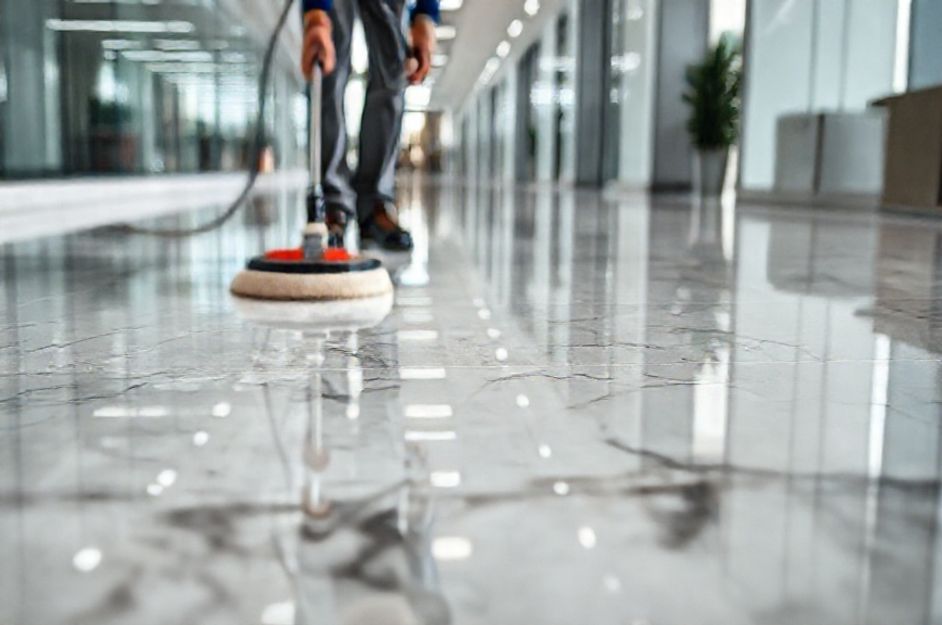
Stone floors are increasingly popular in office buildings, lending a classic and upscale aesthetic. Materials like marble, slate, granite, and terrazzo are frequently chosen for their natural beauty. As stone floor installations rise, so does the demand for cleaning contractors skilled in their proper care. Mastering stone floor maintenance can significantly boost your cleaning company’s income and profitability.
Before venturing into stone floor care, understand the nuances of different stone types and how to design a maintenance program that preserves their appearance. Partnering with a distributor offering quality products and technical support is invaluable.
The initial step is identifying the stone type. Stone floors fall into two categories: those containing calcium and those that don’t. Calcium-containing stones are vulnerable to acid etching.
A simple test can determine the stone type if the surface isn’t coated. Apply a drop of hydrochloric acid in an inconspicuous area. Fizzing indicates calcium; no reaction suggests granite, slate, sandstone, or a stone-look ceramic.
Next, define your desired outcome: a polished surface, a slip-resistant floor, or an easily managed program. Consider the surface type – polished, honed, or textured. Appreciate stone’s natural imperfections, as they create unique patterns that enhance its appeal.
Both calcium and non-calcium containing stone floors share similar maintenance procedures, except during re-polishing. Marble, being softer, develops wear patterns quicker. Marble, limestone, and terrazzo can be effectively polished with superfine abrasives mixed with potassium oxalate or oxalic acid, commonly found in ready-to-use formulas.
Granite, being acid-resistant, requires mechanical polishing with superfine abrasives. Granite re-polishing is slower than marble.
Severely neglected floors may require restoration, best left to professionals. A properly restored floor eliminates lippage, improves appearance, and simplifies cleaning. Modern technology has streamlined restoration, reducing maintenance costs and enhancing the floor’s overall look.
Stone has a porosity factor influencing stain absorption. High-quality impregnators prevent stains from penetrating the stone. Choose between water-resistant or water, grease, and oil-resistant impregnators based on the specific needs.
The cornerstone of your stone floor care program is a quality stone soap. A premium soap cleans and enriches the stone, increasing its resistance to soil and stains. Don’t compromise on quality here.
Quarterly cleaning is advisable for commercial stone floors to remove accumulated soil and stone soap buildup. This is crucial since most stone soaps are non-rinse, leading to dirt accumulation in grout lines even with regular maintenance. Intensive cleaning is necessary for extremely dirty floors.
Other stone surfaces like countertops, vanities, and vertical surfaces (pillars) may need special attention. Consult your distributor for suitable cleaning chemicals.
To succeed in stone floor care, develop a robust program. Investing time and effort upfront will prevent issues, maintain the floor’s beauty, satisfy clients, and grow your profits.