
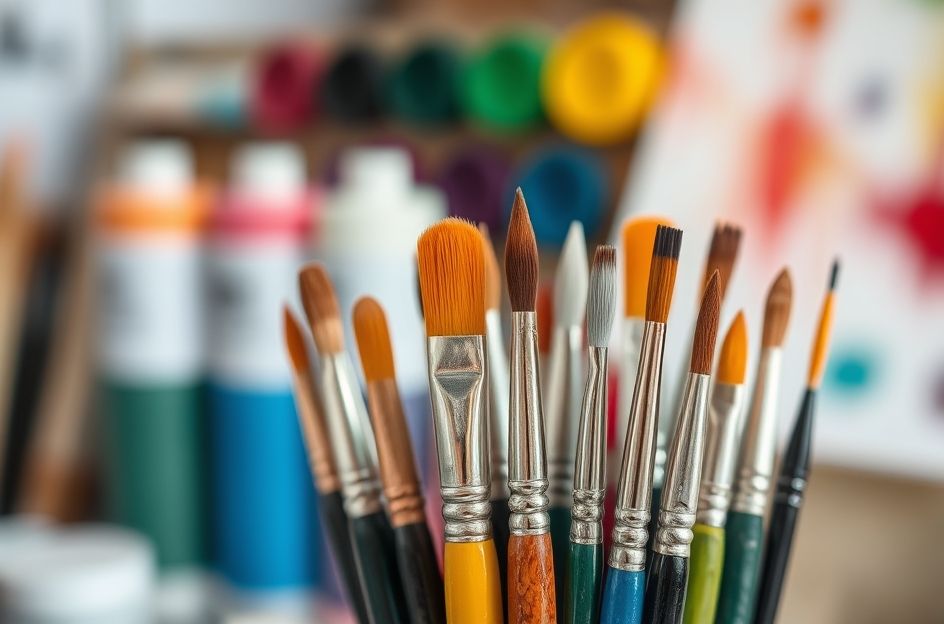
Whether you’re a seasoned professional or a hobbyist, understanding paint brushes is crucial for achieving desired results. Paint brushes consist of bristles, either natural or synthetic, each serving specific purposes. Softer brushes excel with thinner paints, ensuring smooth application, while stiffer brushes are ideal for creating textured effects with bolder strokes.
When choosing between natural and synthetic brushes, consider the advantages of modern synthetic options. While natural hair brushes, like sable, were once considered superior, advancements in synthetic materials have created brushes with comparable flexibility and performance, often at a more affordable price point. For many painters, synthetic brushes offer an excellent balance of quality and value.
Natural hair brushes offer unique qualities:
* Sable: Known for their softness, flexibility, and ability to form a fine point, sable brushes are a premium choice. Kolinsky sable, sourced from Siberia, is particularly prized for watercolor applications.
* Squirrel: A more budget-friendly alternative to sable, squirrel hair brushes provide softness with a touch of spring. Larger squirrel brushes tend to outperform smaller ones.
* Hog/Bristle: Made from coarse hair from the back of pigs, hog or bristle brushes are strong and springy, featuring natural split ends. These brushes are well-suited for oil and acrylic painting techniques.
* Camel: Commonly made from a blend of soft hairs, “camel” brushes are not actually made from camel hair, which is too wooly for painting.