
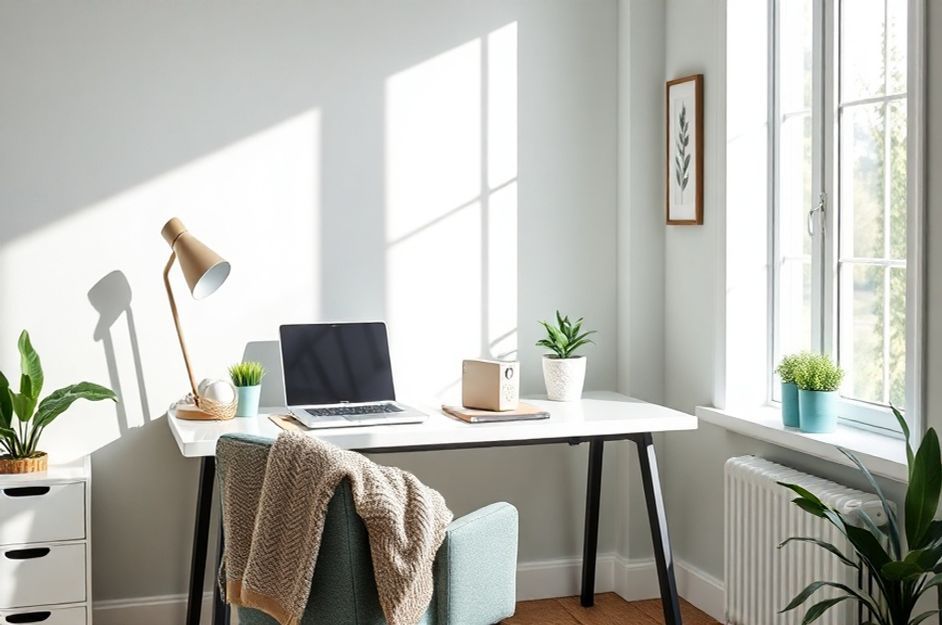
Creating a productive home office involves more than just a desk and a chair. Engaging all five senses can dramatically impact your focus, creativity, and overall well-being. This guide explores how to design your workspace to stimulate sight, sound, taste, touch, and smell for optimal performance.
**Sight: Visualizing Success**
* **Color Psychology:** Incorporate colors that align with your brand or desired mood. Red can increase energy and appetite, while orange promotes sociability. Yellow enhances memory and brightens spaces, and blue fosters trust and calm. Green symbolizes growth and prosperity; purple inspires creativity and alleviates stress. Brown conveys dependability, white represents independence, and black adds sophistication when used sparingly.
* **Light:** Prioritize natural light from multiple directions. Supplement with incandescent lighting and dimmers for a cost-effective way to control brightness.
* **Art:** Choose imagery that resonates with your work and brand. Travel agencies might display exotic destinations, while financial planners could showcase relevant stock market imagery.
* **Balance & Composition:** Combine sharp, geometric shapes with soft, rounded elements for visual harmony. Ensure furniture finishes are cohesive and the overall arrangement is functional and aesthetically pleasing.
**Sound: Hearing the Sounds of Productivity**
* **Eliminate Noise:** Minimize distractions from external sources like lawnmowers or loud music.
* **Curate Background Sounds:** Determine your preferred ambient sounds, whether it’s music, talk radio, or natural sounds like trickling water. Integrate a sound system or water feature into your design.
**Taste: Feasting on the Fruits of Your Labor**
* **Hydration Station:** Provide easy access to clean, fresh water. Consider a mini-refrigerator stocked with beverages for yourself and visitors.
* **Healthy Snacks:** Keep a colorful bowl of healthy snacks readily available.
* **Edible Aromatherapy:** Incorporate plants like citrus or herbs to add a culinary element and create a pleasant aroma.
**Touch: Feeling Your Goals Within Reach**
* **Tactile Textures:** Incorporate a variety of textures like leather, wood, stone, cashmere, wool, chenille, rattan, wicker, and sisal.
* **Mix Hard and Soft:** Balance hard, smooth surfaces with softer elements, including visual textures like patterns and plants. Layering and combining textures creates a richer sensory experience.
**Smell: Scents of Success**
* **Aromatherapy:** Experiment with scents known to boost creativity and energy, such as lavender, pine, citrus, and sandalwood. The scent should be subtle and refreshing.
* **Avoid Negative Scents:** Eliminate musty odors or stale food smells. Maintain a neutral or fresh scent.
* **Signature Scent:** Consider using a signature scent that aligns with your brand or evokes positive associations.