
Newborns exhibit varying sleep patterns, leading parents to compare experiences. While getting a baby to sleep soundly may seem mysterious, several effective strategies can ease this transition. Helping your baby transition from sleeping with you to sleeping independently involves creating an optimal sleep environment.
Initially, a baby may cry for their mother upon waking, seeking familiar comfort. As parents, you can facilitate independent sleep by understanding a baby’s needs. Contrary to the assumption that total silence is ideal, remember the baby’s nine months in the womb. A newborn is accustomed to constant sounds. Therefore, complete silence can be unsettling.
Introduce gentle background noise to mimic the womb. While sudden, loud sounds should be avoided, consistent white noise can be soothing. Many recall falling asleep to the background sounds of family conversations. You can use ambient noise to help your baby sleep better.
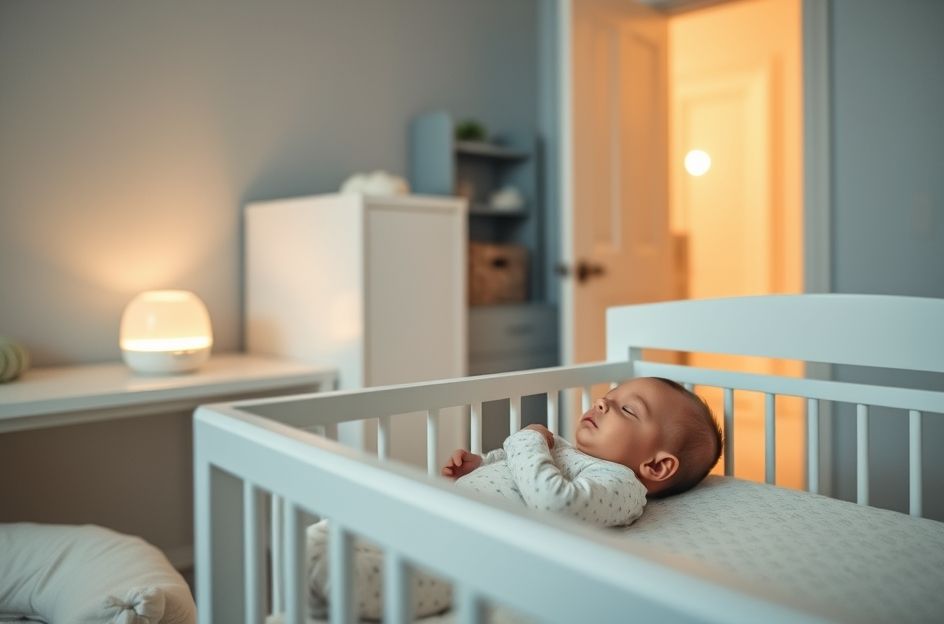
Products like white noise CDs are available, but often unnecessary. Leaving the nursery door slightly open can suffice. Similarly, if a baby falls asleep in a social setting, allow them to remain there. A consistent background noise can be soothing.
Creating a conducive sleep environment assists your baby in learning to fall asleep independently. A gentle humming sound, such as from a humidifier or fan, can be remarkably effective. The key is to find a solution that works for your baby and avoids overcomplication.
Avoid total silence; instead, permit your baby to sleep with some background noise or a slightly open door. Counterintuitively, this familiarity often promotes more restful sleep.