
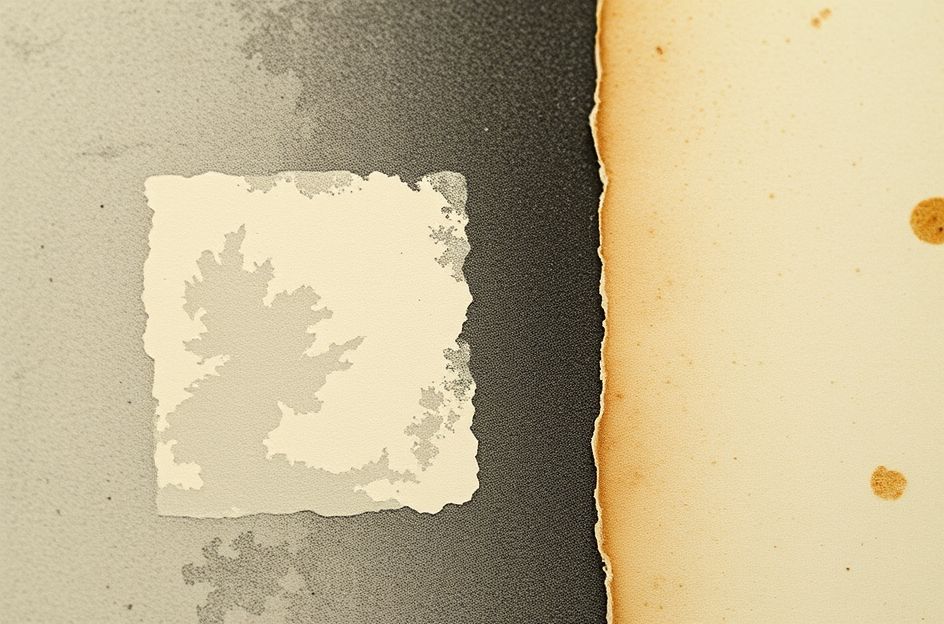
Monoprint and monotype are often used interchangeably, though the term ‘monoprint’ is more common in academic circles, while ‘monotype’ is favored in the commercial art world. The monoprint technique involves an artist applying ink to a smooth surface, such as a metal or Plexiglas plate, effectively ‘painting’ or ‘drawing’ on it. This inked image is then transferred to paper by pressing the paper onto the plate, often using a printing press. The result is a unique, one-of-a-kind print reflecting the artist’s original inked design.
Interestingly, a faint residue of ink often remains on the plate after the initial print. This ‘ghost image’ serves as a foundation for the artist’s subsequent compositions, allowing for a streamlined workflow and creative rhythm. Artists can then build upon this ghost image, incorporating different colors and compositional elements to create new and evolving artworks. This offers the advantage of time-saving and promotes continuous creativity.
Foxing, on the other hand, is a condition that affects paper-based artwork, manifesting as reddish-brown spots or freckles. These spots are believed to be iron oxides and hydroxides, resulting from a chemical reaction between organic acids released by mold and iron impurities present in the paper.
Damp environments and certain paper sizing agents promote mold growth, exacerbating foxing. Acidic materials, such as cardboard and animal glues, can also worsen the condition. Addressing foxing requires professional intervention; a qualified paper conservator can safely minimize its appearance.
For further reading on these topics, consult ‘The Care of Prints and Drawings’ by Margaret Holben Ellis and ‘Prints and The Print Market’ by Theodore B. Donson.