
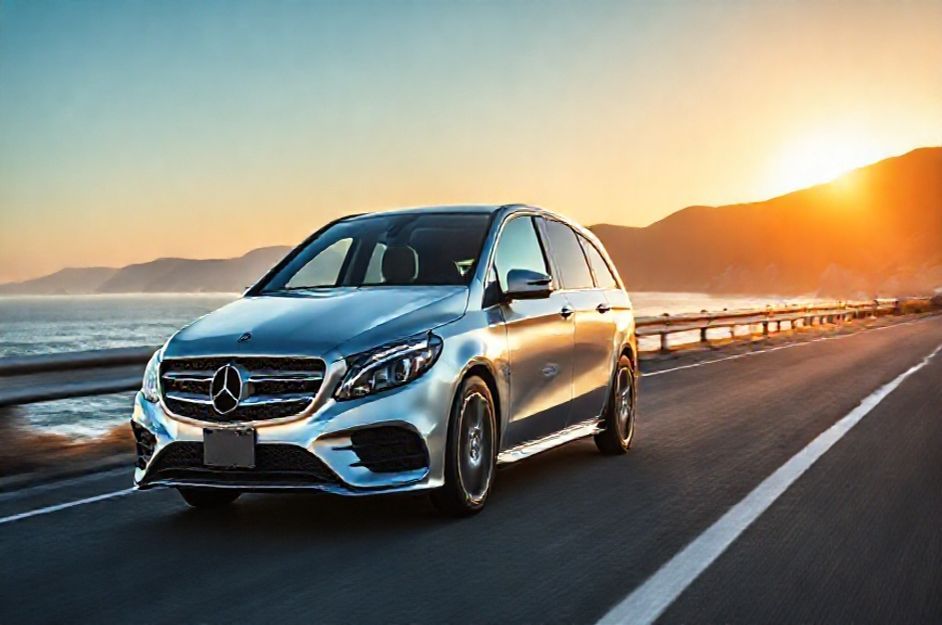
Mercedes-Benz has long viewed the U.S. auto market as a potential outlet for both luxury and more affordable vehicles. While many Americans associate Mercedes solely with high-end cars, the brand’s European lineup includes models that directly compete with vehicles like the Volkswagen Golf. However, introducing a “budget Benz” to the U.S. presents a significant challenge in terms of consumer perception, leading DaimlerChrysler to hesitate on committing to such a move. Let’s examine the proposed B-Class and the reasons behind its uncertain future in the American market.
The B-Class is based on the Mercedes A-Class, a line of compact cars popular in Europe. The A-Class is a direct competitor to the Volkswagen Golf. The slightly larger B-Class utilizes engine placement and design to maximize interior space, offering a surprisingly roomy cabin comparable to the S-Class, especially in its wagon configuration.
Furthermore, the B-Class incorporates Mercedes’ Electronic Stability Program and boasts a comprehensive suite of standard features. In terms of size, it would be similar to a Volkswagen Rabbit but with the premium features and styling associated with the Mercedes brand. If the B-Class were sold in the U.S., prices would likely start around $25,000, exceeding the price of a fully equipped Golf.
According to various automotive news sources, the B-Class’s U.S. arrival is uncertain due to several key factors:
* **Cost Considerations:** Following financial losses in 2005, Mercedes is focused on restoring profitability. Adapting a car for the U.S. market requires substantial investment, and DaimlerChrysler is wary of committing funds to a project with uncertain returns.
* **Consumer Perception:** Overcoming the perception of Mercedes as a purely luxury brand is a major hurdle. The company is mindful of past failures, such as Cadillac’s attempt to introduce a budget model (the Cimarron), which ultimately damaged the brand’s image.
* **Competitive Landscape:** BMW’s potential introduction of its own budget model, the 1 Series, could influence Mercedes’ decision regarding the B-Class. If BMW enters the segment, Mercedes may be more inclined to bring the B-Class to the U.S. market.
Initially, only the sedan and wagon versions of the B-Class would be considered for import, with hatchback models remaining in Europe. With the availability of diesel engines, the B-Class could appeal to customers seeking fuel efficiency, potentially achieving over 40 miles per gallon. While introducing the B-Class to the American market involves risks, the potential rewards could be significant.