
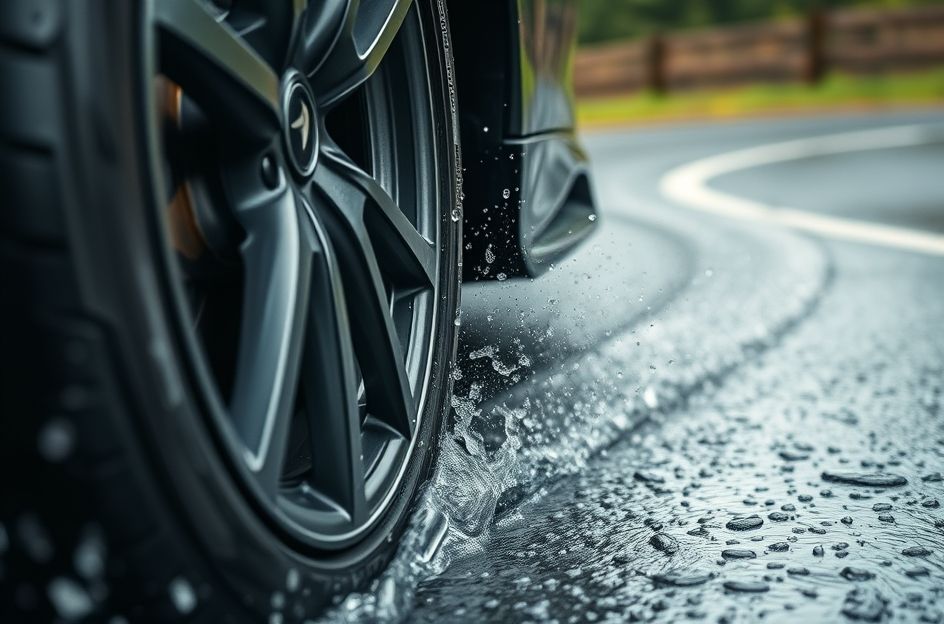
Your car’s tires are your primary connection to the road, and their condition is critical for safety. Losing contact with the road, especially at high speeds, can be catastrophic. Maintaining optimal friction between your tires and the road surface is essential for control and preventing accidents.
Several factors influence this crucial contact. The friction primarily arises from the rubber meeting the road (asphalt or concrete). Gravity pressing down on the car increases this contact, meaning a heavier vehicle generally has more friction. However, this also translates to greater inertia when braking, requiring more friction to stop.
Tire air pressure also plays a significant role. Overinflating tires reduces the contact area and stretches the rubber, potentially decreasing friction. But what about road conditions? Weather elements like water, snow, and mud can drastically reduce friction by creating a barrier between the tire and the road.
Tire tread is designed to combat this. The grooves in the tread provide channels for water, snow, and mud to escape, maintaining rubber-to-road contact and minimizing hydroplaning. Therefore, maintaining good tires with ample tread is crucial for maximizing grip and control, enabling you to steer and brake effectively, and avoid potential hazards. Prioritize your tire maintenance for safety on the road.