
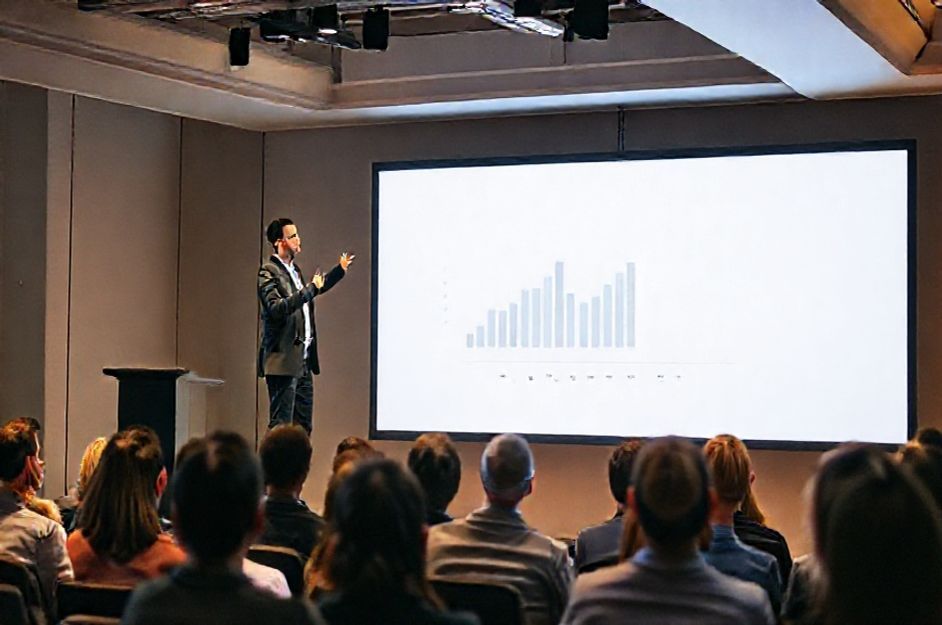
To truly master presentation skills, it’s crucial to understand how much information to include on your slides. This boils down to understanding a fundamental aspect of human nature: our innate desire to be the first to know.
All too often, presentations are designed under the false assumption that audiences will patiently wait for the presenter to guide them through each slide. This is a critical mistake.
In earlier times, news consumption was a slower, more historical process. We awaited scheduled news broadcasts or the morning paper. But with technological advancements, news became immediate. Film brought motion, and video feeds brought us to the scene. Screens overtook paper as the primary source of information. Newspapers struggled, shifting their focus to feature-oriented content to survive.
Cable news networks revolutionized information delivery, offering 24/7 news cycles and catering to the public’s desire for instant updates – news on demand, fulfilling the need to be “the first to know.”
So, what does this have to do with effective presentations? The desire to be the first to know isn’t limited to news junkies; it’s a fundamental human trait. Curiosity is essential for survival, driving us to learn quickly. This translates directly to presentations: audience members crave control and don’t want to wait to understand your slides.
Once their curiosity about a slide is satisfied, they’ll turn their attention back to you. However, when a new slide appears, their focus shifts to understanding the new information as quickly as possible. This isn’t a flaw; it’s simply human nature.
Only when the audience is confident they understand the slide’s content will they fully engage with your message. Until that point, your impact is minimal. You could be reciting the most compelling narrative, but it won’t matter if they’re still processing the slide.
The problem with many business presentations is information overload. Slides crammed with text and data require significant time to process. Viewers waste precious seconds deciding where to start and what’s most important, often using superficial cues like font size or placement to guide them.
Therefore, you must consider how long it takes the average person to grasp the information on your slides. The longer it takes, the higher the risk of losing your audience. The solution? Limit the amount of information revealed with each click.
The faster the audience can understand the new information, the quicker they will refocus on you and your message.