
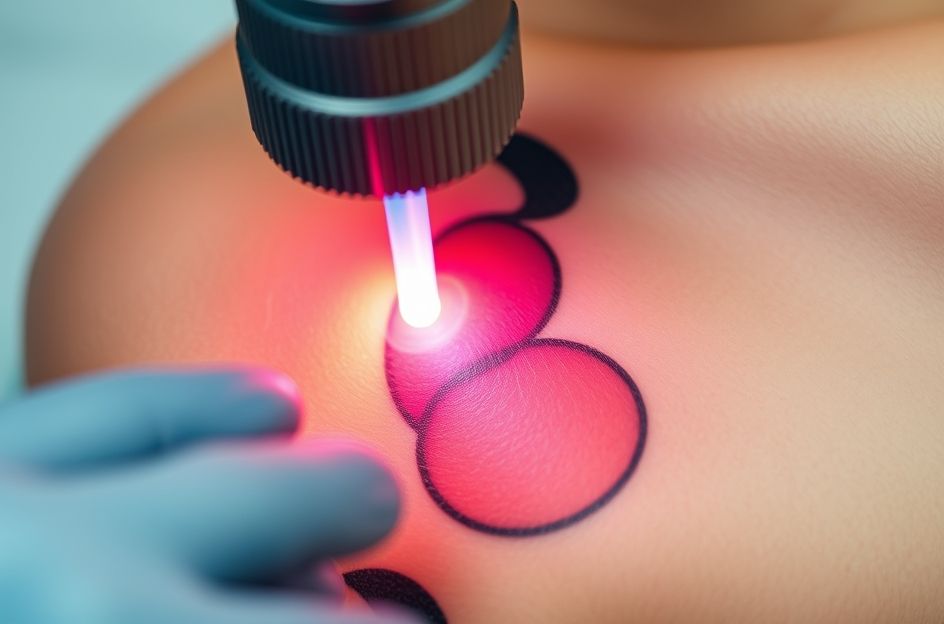
Laser tattoo removal employs selective thermolysis, targeting tattoo pigment with laser energy. This process breaks down the ink while minimizing damage to surrounding skin. Lasers effectively remove professional, amateur, cosmetic, medicinal, and traumatic tattoos. While different colors respond variably, laser removal offers a non-invasive solution for unwanted tattoos.
**Who is a Good Candidate?**
Individuals seeking tattoo removal are generally suitable candidates. The tattoo’s colors, rather than the person’s characteristics, influence removal success. Most colors can be lightened or eliminated, but skin-colored inks (white, pink, flesh-toned, light brown) may darken irreversibly. Red ink can also turn black. A test dose is recommended in these cases.
**Important Considerations**
Laser tattoo removal offers a solution, but several factors should be considered:
1. Complete elimination isn’t always possible due to color dependence, though dramatic lightening is likely. Amateur black tattoos respond faster than professional, multicolored ones.
2. Multiple sessions are typically needed for optimal results.
3. Previously treated tattoos may require further sessions.
4. Multicolored tattoos need lasers of varying wavelengths to target specific pigments.
**Types of Lasers**
* **Q-switched Ruby Laser (QSRL):** Effective for dark blue and black inks, with excellent results. Less effective on red and yellow; variable results on green. Also treats medicinal and traumatic tattoos.
* **Q-switched Nd:YAG:** Works on all colors in both amateur and professional tattoos. Best for black tattoos. Suitable for darker skin tones. Highly effective for red and yellow in frequency-doubled settings (532 nm), unlike QSRL.
* **Q-switched Alexandrite Laser:** Similar to QSRL for tattoo removal, particularly green inks. However, up to 50% of patients may experience skin texture changes.
* **Flashlamp-pumped Pulsed Dye Laser:** Doesn’t penetrate deeply (510 nm wavelength), limiting its use for deeper tattoos. Effective for bright colors like red, purple, and orange. A common side effect is bruising.
**Post-Treatment Care**
Swelling, blistering, and crusting are common after the procedure and will subside. Proper wound care prevents infection and aids healing. Use prescribed antibiotic ointment with regular dressing changes. Consult your doctor for pain relief if needed. Avoid sun exposure to prevent tanning.
**In Conclusion**
Laser tattoo removal provides an effective, less painful method for fading or removing unwanted tattoos.