
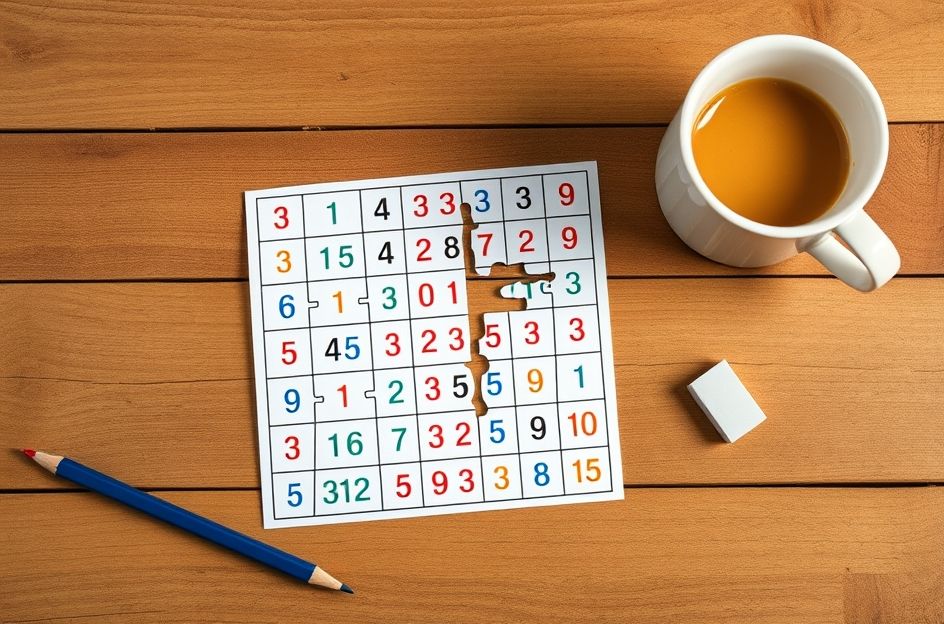
Kakuro puzzles have rapidly gained international popularity, captivating enthusiasts of brainteasers and mind-bending activities. Originally known as Cross Sums, they were later rebranded as Kakuro puzzles, sharing a similar historical trajectory with Sudoku puzzles.
In the 1980s, Maki Kaji, the president of Nikoli puzzles, introduced Cross Sums to Japan, renaming it Kakuro puzzles. The name “Kakuro” derives from the Japanese word “kasan” (addition) combined with a Japanese approximation of the English word “cross” (“kurosu”), initially resulting in “Kasan Kurosu.” Due to the common Japanese practice of abbreviation, it was eventually shortened to Kakuro.
Dell Magazines initially published Kakuro puzzles under their original English name in 1966. Like Sudoku, Kakuro became a staple in mathematics publications and game magazines. Its appeal grew as brain exercises gained recognition for stimulating mental faculties, supported by studies highlighting their cognitive benefits.
The objective of Kakuro is straightforward: fill in blank squares with numbers from one to nine, ensuring that the sum of numbers in each row or column matches the number displayed on its left or upper part. The challenge lies in adhering to the rule that no number can be repeated within the same row or column.
While Kakuro puzzles may seem simple, successfully solving them requires significant cognitive effort, a characteristic appreciated by problem-solving enthusiasts. Numerous books offer a wide variety of Kakuro puzzles, ranging from 6×6 grids for beginners to 30×30 sets for advanced players. These puzzles cater to younger enthusiasts seeking to practice their arithmetic and problem-solving skills. Solutions are usually provided in the back of the books for those facing particularly difficult puzzles.
In Japan, Kakuro ranks second in popularity behind Sudoku. With continued support from Western publishers since its introduction in 2005, Kakuro is poised to remain a favored intellectually stimulating game.