
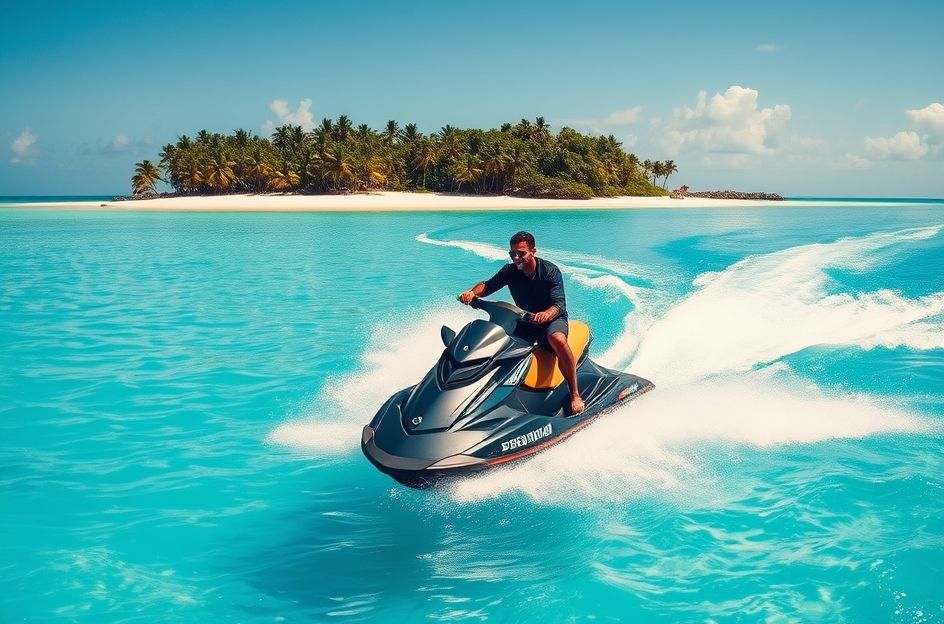
Before investing in a jet ski, understanding their history, features, and options can save you money and ensure you choose the right personal watercraft. This guide provides essential background information to help you make an informed decision.
**A Brief History:**
The jet ski’s origins trace back to Clayton Jacobsen II, but Kawasaki revolutionized the market by being the first to mass-produce these personal watercraft. Their JS-400 model, featuring a 400cc two-stroke engine, significantly contributed to the jet ski’s rise in popularity and recognition within the water sports community.
**Jet Ski Design and Functionality:**
Modern jet skis can accommodate one to four riders, evolving from basic personal watercraft into versatile sports and transportation vehicles. Early models were designed for riders to crouch or stand, primarily on a platform located at the rear. Contemporary designs offer greater flexibility in riding positions, enhanced by steering columns that allow both vertical and horizontal adjustments, improving rider movement and control, especially in varying wave conditions.
The hallmark of jet skis is their jet propulsion system. Water is drawn into a tube within the craft and forcefully ejected from the rear, creating the “jet” effect. This tube also provides horizontal movement, enabling precise steering.
Jet skis prioritize safety and speed without external propellers. This enclosed system offers peace of mind for riders.
**Jet Ski vs. Personal Watercraft (PWC):**
While “jet ski” is often used as a generic term for personal watercraft, it’s important to note that “Jet Ski” is a trademark of Kawasaki Heavy Industries, Ltd. The term commonly applies to stand-up models equipped with handpoles.
**Renting a Jet Ski:**
Due to the significant cost of purchasing a jet ski, renting provides an accessible alternative. Many dealers offer rentals, allowing enthusiasts to enjoy the sport without a substantial financial commitment.