
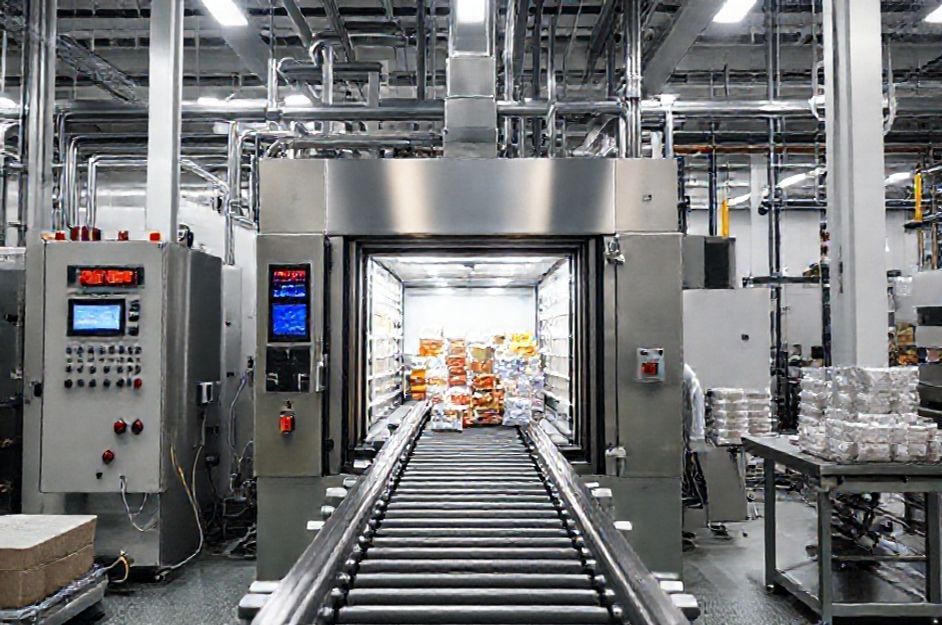
Industrial ovens play a vital role in various manufacturing processes, primarily for removing solvents from products. They are also essential for reactivating adhesives, preheating materials, and applying coatings. These processes demand precise control over heat and mass transfer to ensure optimal results.
The choice of heating method in industrial ovens depends heavily on the specific requirements of each business and its manufacturing processes. Most ovens are engineered to utilize a combination of heat transfer methods for maximum efficiency.
There are two primary designs for industrial ovens: batch and continuous. Batch ovens process materials in discrete batches, offering flexibility for smaller production runs. Continuous ovens, on the other hand, are automated systems designed for high-volume production, seamlessly moving products through the oven.
Industrial ovens find widespread application across diverse industries, including paper coating, textiles, coated fabrics, technical textiles, weaving, carpeting, and construction materials. Their versatility makes them indispensable for various heating and drying applications.
Industrial ovens can be categorized based on their heating mechanism: conduction, convection, and infrared. Conduction ovens transfer heat directly to the product through contact. Convection ovens utilize the circulation of heated gases or liquids to transfer heat. Infrared ovens employ radiant heat to directly heat the material.
Selecting the appropriate energy source is crucial for achieving precise temperature control and optimal process outcomes. Understanding the nuances of each heating method allows manufacturers to fine-tune their processes for maximum efficiency and product quality.