
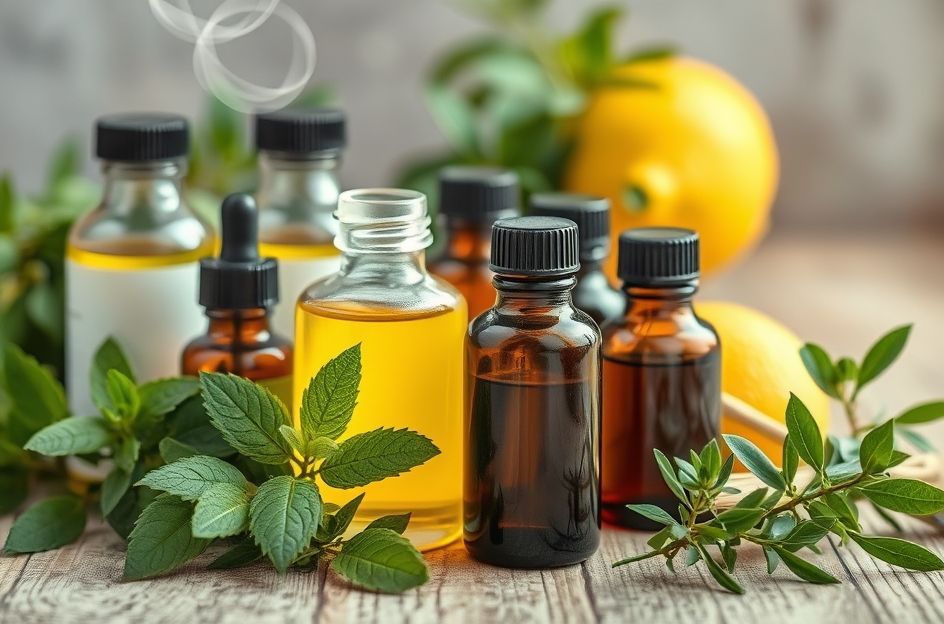
The scientific community is increasingly recognizing the potential of natural botanical compounds to combat a wide array of viruses. Over two decades ago, groundbreaking research by German scientists revealed that extracts from over 100 species within the Lamiaceae family exhibited significant antiviral properties. This pivotal discovery spurred further investigation into the use of essential oils for treating viral infections, particularly in Europe.
Extensive research has now confirmed that essential oils derived from numerous plant families possess antiviral capabilities. Notably, the effectiveness of these oils can vary depending on the specific virus strain, owing to the unique molecular structures inherent in each oil type. These structural differences influence their ability to penetrate various physical barriers, such as tissues, cell walls, and mucous membranes. The interaction between an oil and a virus is also contingent on the virus’s structure, including whether it’s enveloped or non-enveloped and its molecular symmetry.
A key factor in the efficacy of essential oils is their lipophilic nature. This characteristic allows them to be readily absorbed into mammalian tissues, where they can exert their therapeutic effects. Studies on the antiviral effects of essential oils have even indicated that normal cells may develop enhanced resistance to viral penetration, although the precise mechanism behind this phenomenon remains unclear.
One notable example is Melissa officinalis, commonly known as Lemon Balm, a member of the Lamiaceae family. Research has demonstrated its remarkable efficacy against the herpes simplex virus (HSV). Dr. Dietrich Wabner, a professor at the Technical University of Munich, reported that a single application of Melissa oil resulted in complete remission of HSV lesions. In Germany, a cream containing Melissa extract as its active ingredient, marketed as Lomaherpan, is available for treating herpes outbreaks. Direct application of Melissa essential oil, either undiluted or diluted to 10% in a carrier oil for sensitive skin, can also accelerate healing. Furthermore, preemptive application of the oil at the onset of an outbreak, repeated three to four times, has been reported to induce complete remission in some individuals.
Other essential oils with proven effectiveness against the herpes virus include bergamot, eucalyptus, lemongrass, and tea tree oil. In addition to HSV, Ravensara essential oil combined with Tamanu nut oil has been shown to alleviate symptoms of Herpes Zoster, commonly known as shingles.
The diverse antiviral effects of essential oils are attributed to specific components within each oil. Oils with similar compositions can exhibit comparable effectiveness against particular infections. Some key components exhibiting antiviral activity include:
* Anethol: Found in Anise.
* Alpha-Sabinenes: Found in Tea Tree, Laurel, and other oils.
* Beta-Caryophyllene: Found in Lavender, Rosemary, and Thyme.
* Carvone: Found in Dill.
* Cinnamic aldehyde: Found in Cinnamon Bark.
* Citral: Found in Melissa and Lemongrass.
* Citronellol: Found in Rose and Geranium.
* Eugenol: Found in Clove.
* Gamma-Terpinene: Found in Juniper, Eucalyptus, Niaouli, and Tea Tree.
* Linalool: Found in Lavender and Neroli.
* Linalyl acetate: Found in Clary Sage, Lavender, and Bergamot.
While comprehensive in-vivo studies are limited due to the ethical challenges of deliberately infecting humans with viruses, existing research strongly suggests that the antiviral effects observed in-vitro should translate to real-world applications. The herpes virus, particularly HSV, has been extensively studied due to its relative ease of investigation. However, the principles of oil/pathogen pairing should extend to other viral infections as well.
Case studies conducted by professional aromatherapists have highlighted the importance of the oil/symptom relationship. Essential oils from the Myrtaceae family, such as Eucalyptus Radiata and Tea Tree, and Ravensara, which is rich in Eucalyptol, have shown promise in alleviating respiratory symptoms. Hyssop decumbens, from the same plant family as Melissa, has been explored for lower respiratory tract infections. These oils can be administered via diffusers at regular intervals or through massage after dilution in a carrier oil.
In conclusion, while definitive identification of the specific virus type involved in an illness can be challenging, certain essential oils have demonstrated efficacy in specific cases. Melissa has been extensively studied and proven effective against HSV, while Eucalyptus and Ravensara have been successfully used for respiratory infections. These oils can be safely integrated as complementary therapies alongside conventional medical care to support recovery and enhance emotional well-being during the healing process. Ultimately, selecting an essential oil or blend that evokes pleasant, calming, or uplifting sensations can further promote a positive mental outlook. However, it is crucial to emphasize that self-treatment with essential oils should never replace professional medical care when symptoms of infectious illness are present.