
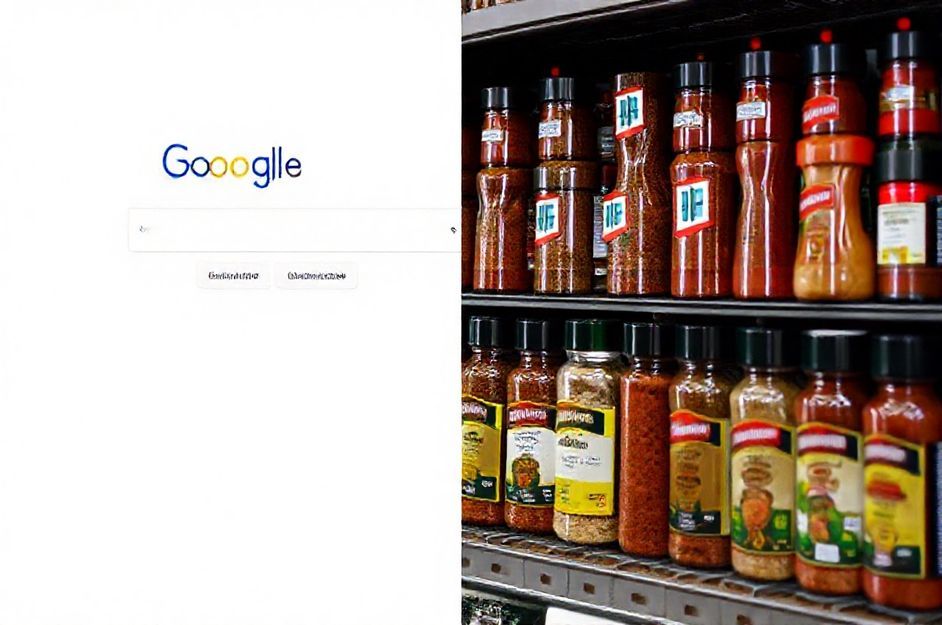
Google’s dominance in web search is often compared to a franchise, but is it truly a monopoly like McCormick’s hold on the U.S. spice market? While Google leads in search, significant issues remain. The platform struggles to locate sites not easily described with keywords, leaving room for specialized niche directories and social search engines.
These alternative services might not surpass Google, but they highlight a crucial distinction: Google excels at providing the *means* (keyword search) to satisfy the *need* (finding information online). However, it doesn’t dominate the *need* itself. Unlike McCormick, the leading U.S. spice producer, Google faces strong competition.
McCormick commands approximately 45% of the U.S. retail spice market, with its closest competitor holding only 12%. While the exact figures for web search market share are debated, Google’s share is demonstrably less than 45%, and at least two competitors exceed 12%. This signifies a less fragmented market compared to spices.
The spice market operates like an inverted funnel. A few producers channel products through retail, industry, and restaurants. Consumers indirectly choose McCormick by selecting a grocery store, food product, or restaurant. Their choices are limited to what those establishments offer.
Search presents a different scenario. Although the inverted funnel shape exists, it’s less pronounced. Search results flow through dependent sites chosen by the searcher. This user control contrasts sharply with the spice market, where no single supermarket or restaurant chain dominates McCormick’s consumption. Searchers actively select their search provider, even if they aren’t always consciously aware of using Google. Unlike McCormick, which is often consumed unknowingly in various products and meals, using Google involves a deliberate choice.
From an investor perspective, McCormick’s strength lies in the consumer’s limited direct choice. Even at the supermarket, shelf space allocation influences decisions. Conversely, first-time Google users actively choose the platform.
Infrastructure also plays a crucial role. McCormick’s existing production infrastructure provides cost advantages, but its distribution network is nearly impossible to replicate, solidifying its franchise. This network helps retain customers and facilitates global expansion.
Google’s algorithm and index, its ‘production infrastructure,’ are increasingly easy to duplicate. The barrier to entry isn’t high. While Google offers a superior search service now, that may change. Distribution, typically the most valuable and difficult-to-replicate aspect of a franchise, is key.
Therefore, the question arises: will building a better search engine automatically attract users? Probably not. This benefits Google, as it won’t always have the best engine. Google’s brand is its greatest asset, preventing users from instantly switching to newer alternatives.
Google’s revenue hinges on attracting searches. This requires users to actively choose Google and then remain loyal. The brand drives initial adoption, while the service maintains long-term engagement. While search customers exhibit stickiness, it’s not absolute. Switching from Google is far easier than switching from Windows, highlighting the importance of the brand. While the Google brand is powerful, its true worth may not justify its immense valuation.