
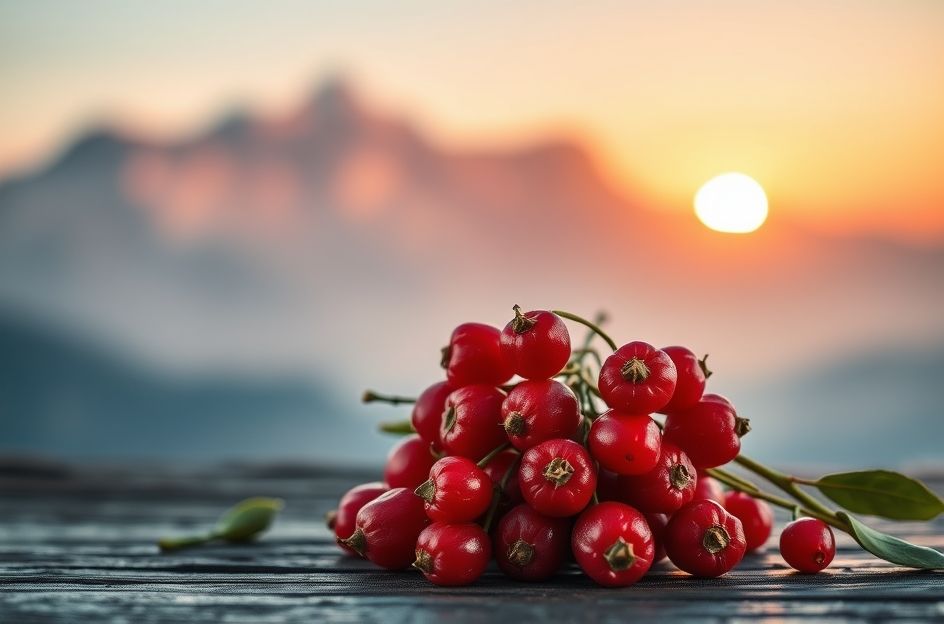
For generations, goji berries (Lycium barbarum), have been a cornerstone of traditional Asian medicine. While revered for their health benefits, the full scope of their nutritional power has only recently begun to be understood worldwide.
Legends surrounding the goji berry are rich and varied. In Central Asia, festivals celebrate the fruit, and poems have been written in its honor. One story from the Tang Dynasty (circa 800 AD) tells of a well near a Buddhist temple, fed by water that flowed through goji vines. Monks and villagers who drank from the well were said to enjoy robust health, with many retaining their youthful vigor even into old age.
It is believed that Himalayan healers were among the first to recognize the potent properties of the goji berry, sharing their knowledge with herbalists throughout China, Tibet, and India. As the fruit spread, so did its reputation as a remarkable source of health and vitality.
Scientists have identified four key bioactive polysaccharides within Lycium barbarum, aptly named Lycium barbarum polysaccharides (LBP). Research indicates that these unique polysaccharides play a crucial role in regulating and supporting the body’s biochemical defense systems.
Since its discovery in the Himalayas, the goji berry has been recognized for its unparalleled health-promoting capabilities. Numerous scientific studies from respected universities across the globe have validated the health benefits attributed to goji berries by Himalayan healers centuries ago. Over 50 studies have been published in prestigious health journals, including the British Journal of Nutrition, International Immunopharmacology, and the Journal of Chinese Herbal Medicine.
According to Dr. Mindell, author of “Goji: The Himalayan Health Secret,” regular consumption of goji berries is common among some of the world’s longest-living people, highlighting its potential as a powerful anti-aging food.
The goji berry stands out as a food with exceptionally high nutritional density.