
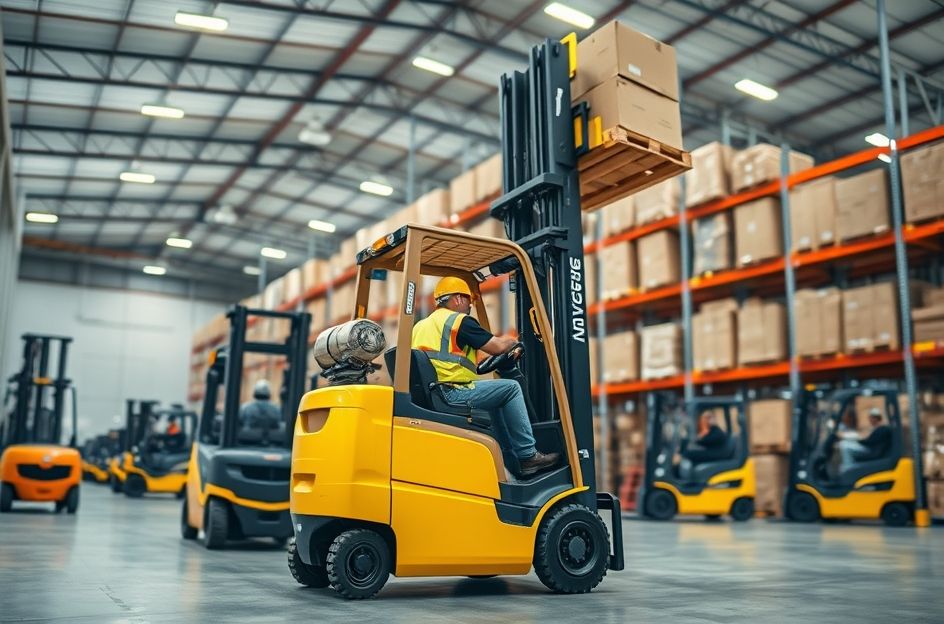
Forklifts are essential in various industries, primarily classified by their fuel source into internal combustion (IC) and electric models. IC forklifts, powered by gasoline or propane, are robust and suitable for heavy-duty outdoor tasks. Electric forklifts, running on batteries, are preferred indoors due to their emission-free operation, making them ideal for warehouses. Rough terrain forklifts, often using gasoline, diesel, or natural gas, are designed for outdoor use, featuring durable construction and thicker tires.
Safety is paramount when operating any forklift. Operators must adhere to safety precautions to prevent accidents. It’s crucial to respect weight limits to avoid tipping and to be mindful of the unique steering, which requires constant adjustments to maintain a straight path. When handling loads, avoid sharp turns to maintain the center of gravity. Certified and licensed forklift operators are essential for safe and efficient operation.
Forklifts have significantly improved warehouse productivity, allowing a single operator to move heavier loads quickly. Consistent maintenance, skilled operation, and comprehensive training are vital to sustain this efficiency. A thorough understanding of forklift mechanics is crucial for all operators.
Selecting the right forklift requires careful consideration of specific needs. Evaluate the intended use and purpose of the forklift. Inspect the structural condition, especially when considering a used model. Assess its overall value, ensuring it aligns with your operational requirements. Like any vehicle, forklifts represent a significant investment, necessitating a comprehensive understanding of features and needs before purchase.