
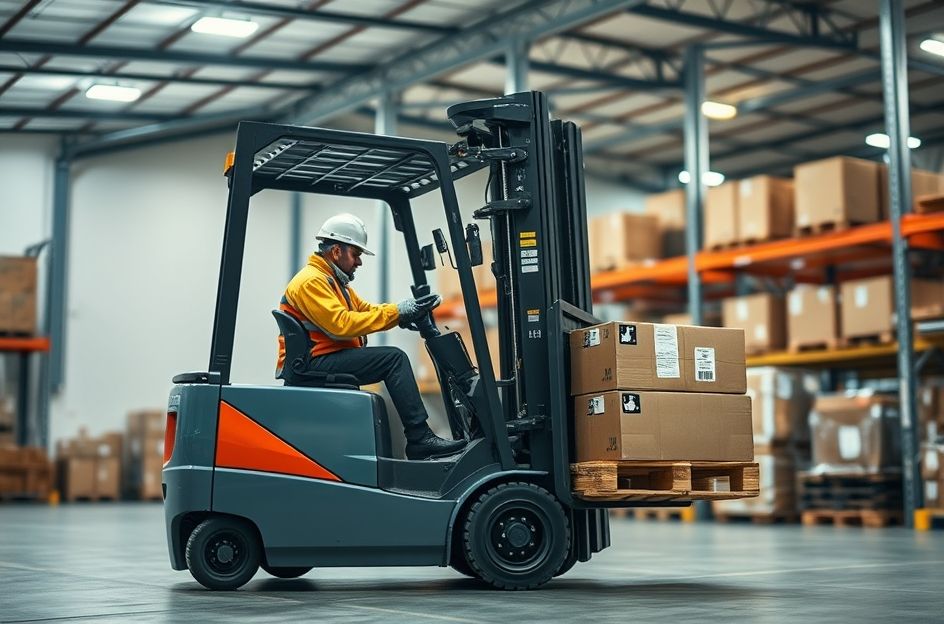
Forklifts are essential industrial vehicles designed to replace manual lifting and labor. These machines utilize two front-mounted “forks” or arms to efficiently lift, lower, stack, and unstack heavy loads, typically placed on wooden pallets for easy handling of large quantities. Driver error contributes to almost half of all forklift accidents, frequently involving pedestrians. Consequently, maintaining a safe distance between forklifts and people is paramount.
Other common forklift-related accidents include:
* Forklift rollovers and overturns
* Collisions with other vehicles or stationary objects
* Operator body parts striking external objects
* Loads falling from pallets
Employees can take proactive steps to minimize forklift accidents. Operators should always conduct a pre-operation safety inspection of the vehicle. Once deemed safe, drivers must adhere to safe load handling procedures, paying close attention to the forklift’s specific load limits. Given that many forklifts are gas-powered, strict adherence to gasoline limits and storage protocols is crucial. Similarly, proper battery handling and maintenance are vital for electric forklifts.
Here are essential safety procedures for all employees, some seemingly obvious yet critical enough to warrant repetition:
* Strictly prohibit passengers on forklifts unless a designated seat with restraints is provided.
* Maintain a clear safety zone around operating forklifts.
* Exercise caution when transitioning between artificial and natural lighting conditions.
* Secure loads and lower them to a safe center of gravity before transport.
* Avoid sudden stops and starts.
* Keep all body parts within the confines of the overhead protection.
* Only use ramps if properly trained in their safe negotiation.
* Remain seated and secured at all times during operation.
* Operate forklifts within designated areas, separate from pedestrian walkways.
* In the event of a forklift overturn, remain inside the cabin.
Most importantly:
* NEVER lift people on the forklift or pallets.
* If worker elevation is unavoidable, use a certified work platform.
Beyond daily vehicle inspections, the workplace itself should be assessed for potential hazards, including:
* Overhead power lines
* Blind corners
* Pedestrian zones
* Low doorways
* Uneven flooring
* Ramps
* Overhead pipes and fittings
* Confined spaces
* Adequate lighting
* Noise levels
Above all, comprehensive training is mandatory before operating a forklift. This training must encompass formal instruction, practical demonstrations, and a workplace evaluation to confirm the operator’s ability to safely handle the equipment. Initial training should address both truck-related and workplace-related topics.
Truck-related training topics include:
* Operating instructions, warnings, and precautions specific to the authorized forklift models
* Distinctions between forklifts and automobiles
* Forklift controls and instrumentation
* Engine or motor operation
* Steering and maneuvering techniques
* Visibility considerations
* Fork and attachment adaptation, operation, and usage limitations
* Vehicle capacity
* Vehicle stability principles
* Operator-level vehicle inspection and maintenance procedures
* Refueling and/or battery charging protocols
* Operating limitations
* Any pertinent information from the forklift operator’s manual.
Workplace-related training topics include:
* Surface conditions in the operating environment
* Load composition and stability factors
* Load manipulation, stacking, and unstacking procedures
* Pedestrian traffic patterns
* Navigation of narrow aisles and other restricted areas
* Identification of hazardous (classified) locations, such as flammable storage areas
* Ramp and slope operation techniques
* Closed environment considerations, including ventilation and carbon monoxide/diesel exhaust management
* Other unique or potentially hazardous environmental conditions present in the workplace.