
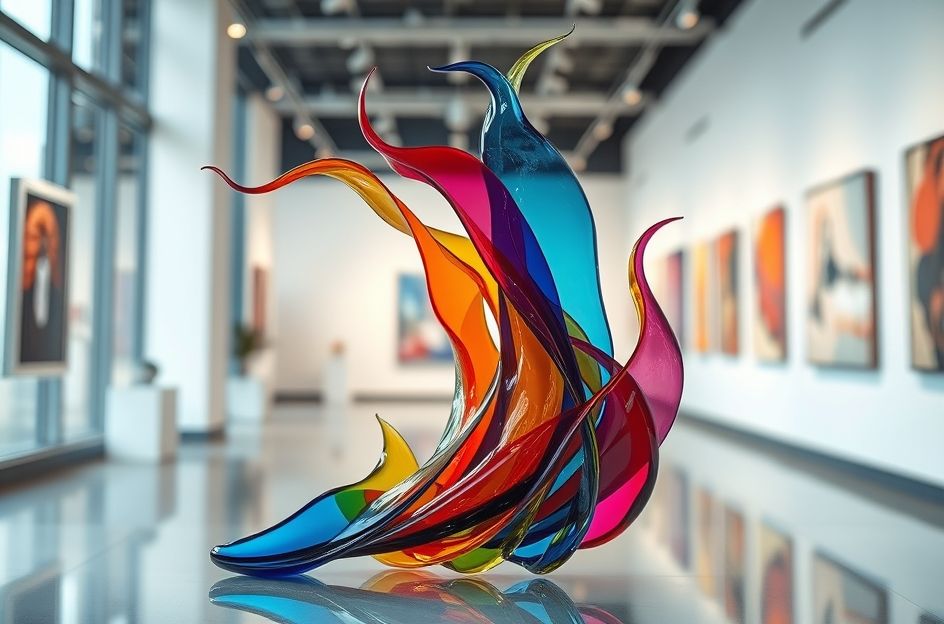
Contemporary glass art represents a significant movement where individual artists craft unique pieces from molten glass in smaller studios. This evolution began in the early 1960s and flourished throughout the late 20th century. Unlike functional glassware, these creations primarily serve as sculptural or decorative statements.
Before the 1960s, “art glass” typically referred to decorative items mass-produced in factories by teams of workers using large furnaces. Renowned examples include Tiffany and Steuben in the USA, Gallé in France, Hoya Crystal in Japan, and Kosta Boda in Sweden. This earlier form of art glass emerged from factory systems where teams of artisans blew and shaped all glass objects.
The late 19th century marked the peak of this traditional art glass movement, occurring just as mechanical bottle-blowing and window glass production began replacing factory glass blowers. In contrast, contemporary glass art studios emphasize hand-worked variations, allowing individual artisans to showcase their creativity in each piece. Many studio glass artists also aspire to create larger, signature works, akin to masterpieces in the guild and factory systems, alongside smaller production pieces.
Common Types of Art Glass include:
* Blown Art Glass
* Cast Art Glass
* Fused and Slumped Art Glass