
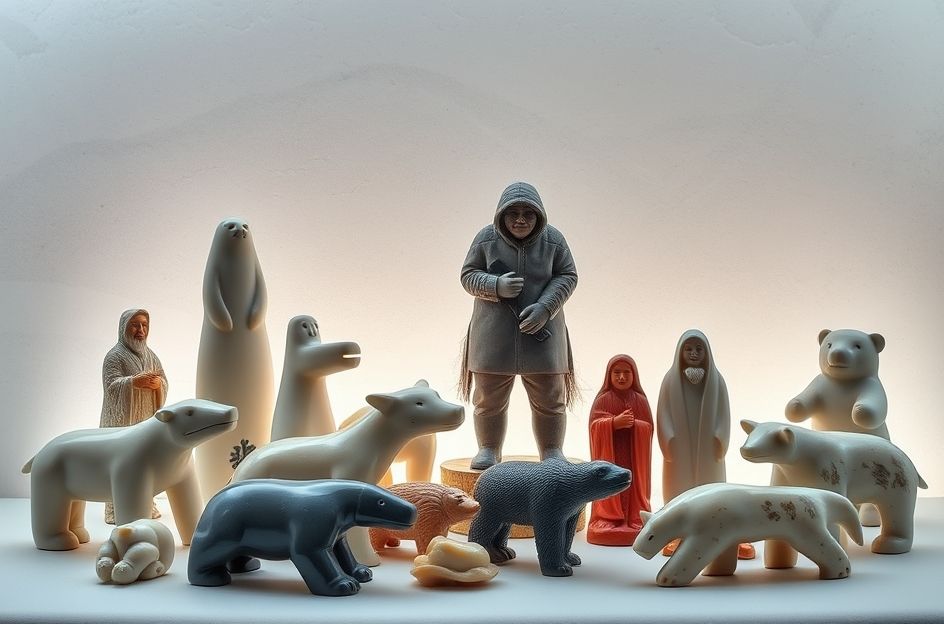
Inuit soapstone sculptures, while sharing a common origin, exhibit a remarkable diversity of artistic styles across different Arctic communities. While both animal and human subjects are prevalent, some regions focus more on animal representations, while others prioritize human figures. The level of realism also varies considerably. Some artists create highly detailed and lifelike sculptures, while others favor a more primitive and stylized aesthetic. Finishes range from highly polished to deliberately rough and unrefined.
Certain areas are known for producing miniature sculptures, echoing the artwork created during the initial interactions with Europeans. The spectrum of Inuit sculpture spans from traditional and conservative to daring and unconventional. Sculptures can depict playful scenes, such as children at play, or incorporate humor, like a waving walrus. Conversely, shamanic and transformative pieces can evoke a sense of unease or even fear. Hunting scenes often capture the stark realities of life and death in the Arctic environment.
A unifying characteristic of all Inuit sculptures is their reflection of the deep connection Inuit people have with family, nature, and spirituality. Even Inuit artists who have embraced Christianity may still incorporate elements of Inuit spirituality and legends into their artwork, showcasing the enduring significance of their cultural heritage.
These stylistic differences are influenced by the availability of various stone types and other materials within each community, as well as regional artistic preferences. The movement of artists between communities also contributes to stylistic exchange, particularly in larger centers like Iqaluit, which has experienced an influx of Inuit artists from across Nunavut since becoming the capital. This has fostered a vibrant blend of Inuit art styles.