
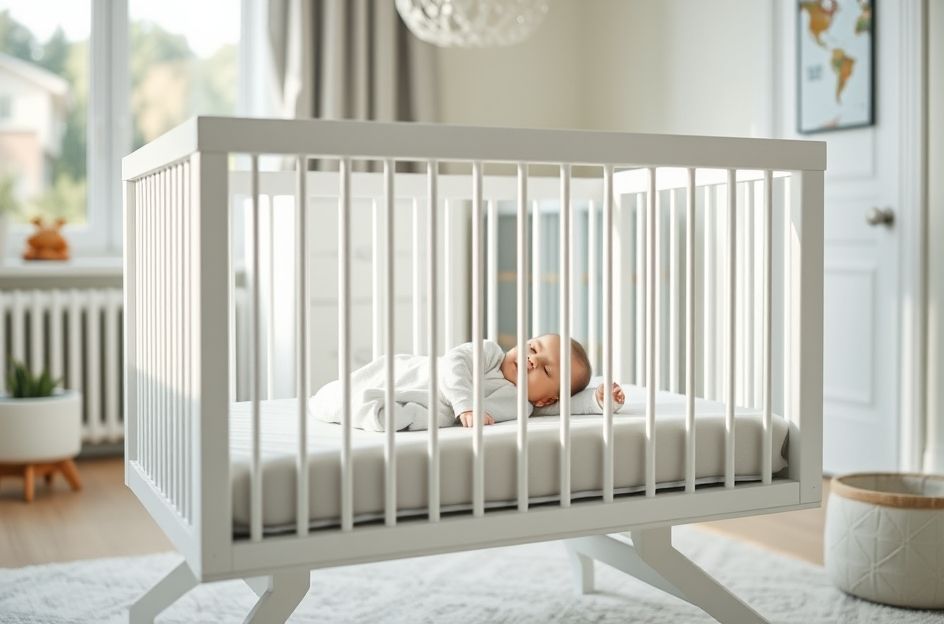
Expecting a baby? Congratulations! Whether you’re a first-time parent or already have children, carefully consider the safety of your baby’s crib. If you’re using a second-hand or older crib, a thorough inspection is essential.
Prioritize your baby’s safety by ensuring all screws, bolts, and fasteners are present and tightly secured. Before placing your baby in the crib, rigorously test its stability. Apply weight roughly equivalent to a 4-month-old baby and bounce it on the mattress. Any instability could lead to serious injury.
When setting up the nursery, carefully consider the crib’s location. Avoid placing it near windows with Venetian blinds unless you shorten or anchor the cords to prevent entanglement. As your baby grows and attempts to climb out, a fall from a window can cause severe harm.
While blankets might seem comforting, they pose a potential risk. The safest practice is to dress your baby in a blanket sleeper. If you choose to use a blanket, tuck it firmly around the foot of the mattress, ensuring your baby’s feet touch the footboard. Never pull the blanket higher than chest level to prevent suffocation.
Bumper pads, while seemingly a good idea, can be hazardous if not properly secured. Always fasten them at all four corners and evenly space them along the sides of the crib. Ideally, use sixteen ties – eight at the top and eight at the bottom.
Mobiles are visually stimulating but must be removed once your baby begins to sit up. Regularly inspect them for small, detachable parts that could become choking hazards.
Whether the crib is new or second-hand, meticulously inspect the mattress. Check the covering for any tears or cracks and ensure the mattress fits snugly within the crib frame. Gaps can lead to suffocation. Use fitted sheets that stay securely in place, and consider sheet hooks for added security.
Mattress height is crucial. Initially, placing the mattress in the highest position makes it easier to reach your baby. However, as your baby grows, lower the mattress accordingly. When your baby can stand, the mattress should be at its lowest setting. Ensure at least 26 inches between the top of the side rail and the mattress.
If your child attempts to climb out or their head reaches above the side rail, consider transitioning to a regular bed or a convertible crib designed to grow with your child.
Inspect the crib for any potential hazards. Avoid ornate carvings where limbs could become trapped. Crib safety guidelines dictate that slats should be no more than 2 and 3/8 inches apart to prevent head entrapment.
By diligently following these safety measures, you can create a secure and nurturing environment for your baby in their crib.