
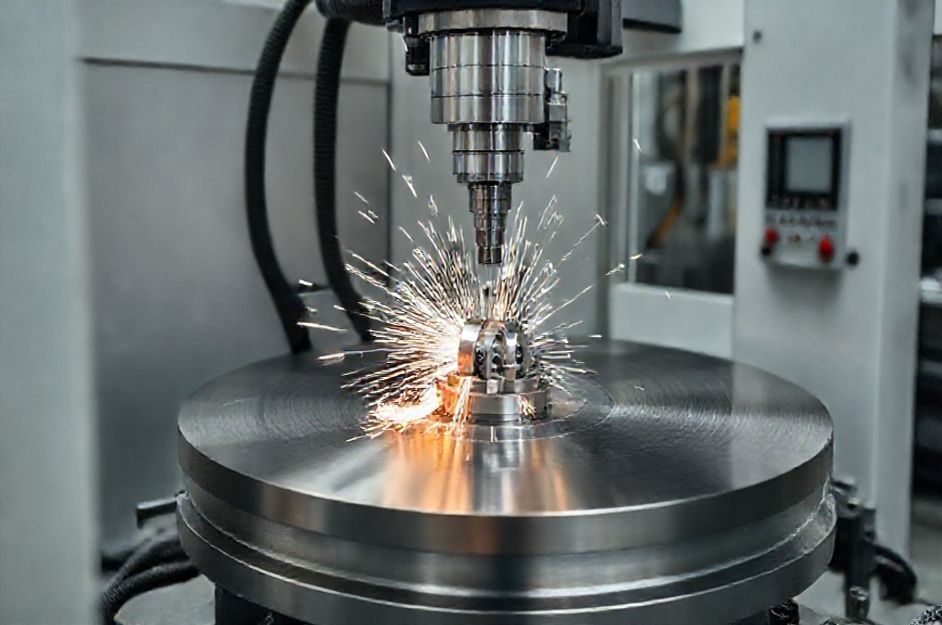
CNC rotary tables are essential for precision metalworking in CNC milling. Unlike simple dividing or indexing heads, they offer controlled rotation within horizontal and vertical planes, providing enhanced capabilities for machining complex parts. A CNC rotary table typically consists of a robust base designed for secure clamping of materials, and a precision-machined disc, often featuring T-slots, for additional clamping options. Rotation can be controlled manually, via a worm drive, or through the CNC machine’s program.
**Accuracy and Precision**
High accuracy is a key advantage. Graduated dials and vernier scales enable precise positioning. A central hole accommodates morse taper centers or fixtures. When mounted horizontally, a tailstock often provides support. The most common configuration positions the rotary table vertically, aligning its plane with the milling cutter.
**Coaxial Alignment for Complex Machining**
Mounting the rotary table on a secondary table allows for precise workpiece centering relative to the rotary axis. This coaxial alignment with the cutting tool enables intricate operations. Offsetting the secondary table in the X or Y plane allows the cutter to operate at a distance from the workpiece center, facilitating simultaneous, multi-axis machining.
**Selecting the Right Rotary Table**
The market offers a wide array of CNC rotary tables with varying specifications and features. Some are tailored for specific tasks, while others provide general-purpose functionality. When choosing a rotary table, seek advice from experienced users to gain practical insights beyond marketing claims. Visiting workshops or attending CNC seminars can also provide valuable firsthand knowledge.
**Setup and Best Practices**
Proper setup is crucial. Ensure a stable platform and secure mounting of the CNC milling machine. Minimize vibration for optimal results. Select appropriate materials, thicknesses, and sizes. Use suitable fixtures to enhance efficiency and accuracy.
Before starting production runs, thoroughly test all relevant variables. Familiarize yourself with the machine’s capabilities, including different cut types, materials, table characteristics, cut depths, feed rates, and tooling options. Develop a feel for the machine’s operation (safely, of course!).
**Safety First**
Always prioritize safety. Read the manuals thoroughly to understand safety precautions and machine features. Understand the potential benefits and risks associated with CNC milling and rotary table operation to protect both your business and your employees.