
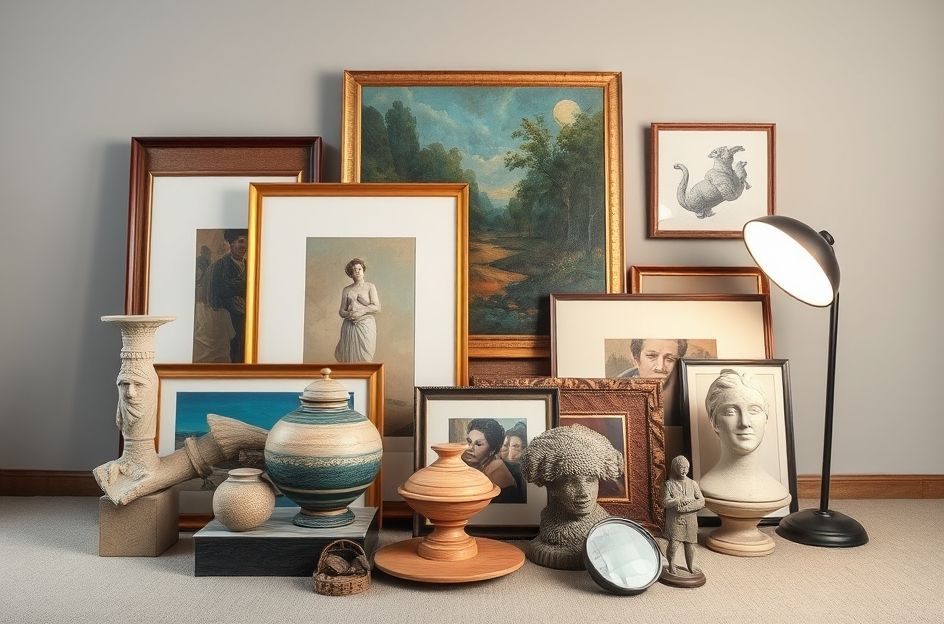
The art world is rife with misconceptions. Let’s debunk some common myths surrounding art valuation.
**Myth: An artist’s death automatically increases the value of their art.**
Reality: Price increases are driven by supply and demand. A surge in value after an artist’s death only occurs if demand exceeds the available supply of their work. If the artist’s pieces were scarce before their passing and demand remains high, prices can indeed escalate. *Art News* highlighted this in a 2003 article featuring ten highly sought-after artworks, each potentially worth over $5 million. However, these pieces remain unavailable because their owners understand the impossibility of replacing them.
**Myth: An artist’s proof is more valuable than a regular edition print.**
Reality: Typically, artist’s proofs are consistent with the regular edition in both appearance and value. A color trial proof might occasionally be deemed more valuable if experts consider it a superior product compared to the regular edition or artist’s proof.
**Myth: “It’s just a print.”**
Reality: Some artists intentionally choose printmaking techniques like lithography, etching, serigraphy, or woodcuts as their primary medium. Original prints created through these methods by renowned artists have commanded prices exceeding $100,000. The phrase “it’s just a print” is usually reserved for reproductive prints – photographic copies of existing artworks.
**Why art cannot be accurately valued from photographs alone:**
* **Liability:** Professional art appraisers are held to a higher standard than art dealers.
* **Accuracy:** A professional appraiser prioritizes providing a correct and reliable valuation.
Photographs fail to reveal crucial condition issues that significantly affect an artwork’s value. Details like light staining, mat burning, and foxing are often invisible in photos, and the general public lacks the expertise to identify and describe these flaws accurately.
Furthermore, reproductions on canvas can closely resemble original oil paintings in photographs. Without knowing the location of the original painting, it’s challenging to differentiate a photographically generated reproduction from an authentic artwork. The rise of giclée prints on canvas, often enhanced with paint, further necessitates hands-on inspection.