
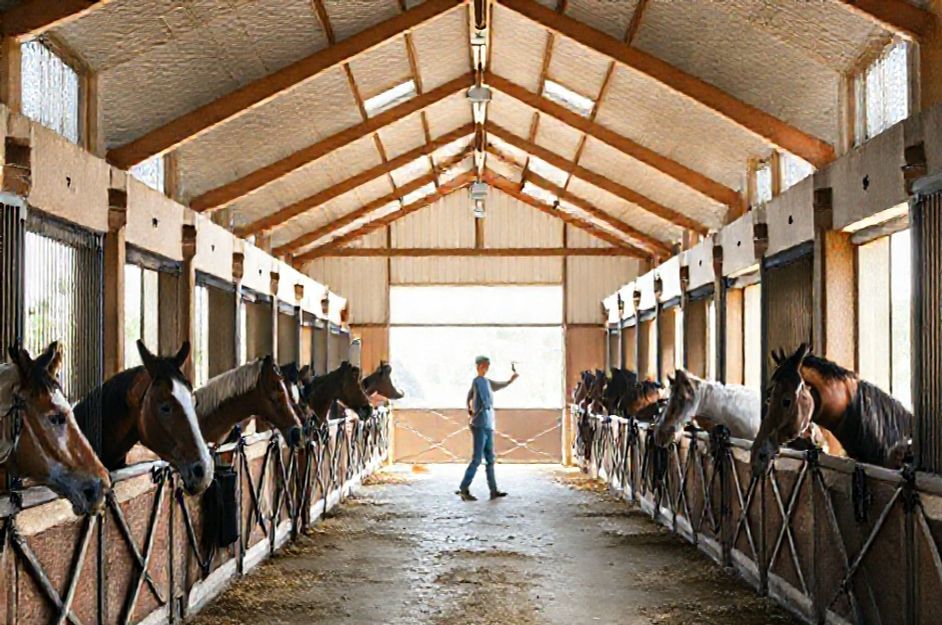
Providing optimal care for horses involves ensuring their living environment is as comfortable and functional as possible. Instead of housing them in inadequate makeshift structures, consider the principles of well-designed horse barns. These barns prioritize ventilation, natural light, spaciousness, and ease of use for both horses and caretakers. According to seasoned horseman and barn builder Champ Hough, a horse barn should feel like a true home for its equine residents. With over thirty years of experience, Hough offers valuable insights into constructing efficient and horse-friendly barns.
Before construction begins, selecting an appropriate site is crucial. The ideal location promotes ample air circulation and effective drainage, minimizing the risk of disease outbreaks within the barn. Additionally, the site should offer convenient access to essential utilities, the driveway, and the main road. Hough emphasizes orienting the barn strategically with these factors in mind. For aesthetic reasons, locate less appealing elements, such as manure bins, away from roads and the main house while maintaining proximity to the barn. Delivery docks and ramps should be similarly situated. Hough also advises separating delivery and horse traffic to prevent congestion.
When planning the layout, Hough recommends minimizing the distance between key workstations. Water, feeding, and grooming areas should be easily accessible and close to one another. Confining potentially messy areas like stalls and bathing areas helps to keep the rest of the barn clean. Grouping stalls together is another effective strategy.
While 12-foot aisles are common in horse barns, Hough suggests increasing the width by a couple of feet. This allows for machinery to enter the barn easily and provides ample room for horses and caretakers to move around comfortably. Wider doorways improve natural light and air circulation. Installing screens on windows and sliding doors helps control fly populations, while exhaust fans remove hot air and allow cooler air to circulate. For flooring, Hough recommends pavers or asphalt due to their superior drainage and comfort for horses’ legs.
Investing in a well-designed horse barn leads to long-term benefits, including reduced veterinary bills, lower maintenance costs, and increased property value. Properly constructed barns promote healthier horses, improved breeding, and the potential for champion-quality offspring.