
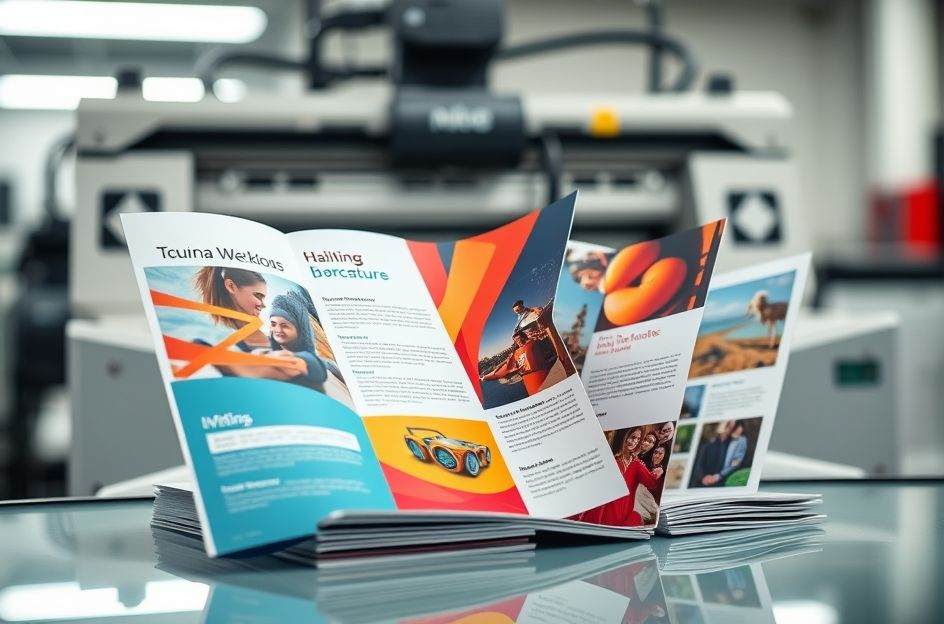
Brochures are powerful promotional tools for real estate listings, trade show handouts, data sheets, and countless other applications. To make brochure printing easy, start by clearly defining your needs and establishing a budget. Begin with a layout that effectively integrates your text and images to convey your message. Then, select the printing method and paper that best suit your project.
There are two primary printing options: offset and laser/digital. Both produce high-quality results in large quantities. Offset printing, utilizing the four-color process, is the standard for high-quality, full-color commercial work. This process involves transferring ink from a metal plate with etched images to an intermediary surface, and then pressing the paper against it. While setup costs can be higher, the actual printing is generally more cost-effective for larger runs.
Laser or digital printing, similar to how copy machines work, uses a laser beam to create the image. Offset printing typically delivers sharper text and higher resolution images compared to laser or digital methods. However, for smaller jobs, laser or inkjet printers or copy stores can be a more economical choice, eliminating setup fees and some shipping expenses.
Paper selection is crucial. Most printers recommend a heavyweight, coated, or glossy paper stock for a more vibrant and professional look.
The folding of your brochure is another key consideration. Common options include the half-fold (single fold), the tri-fold (with left and right flaps opening inward), and the Z-fold (accordion fold). Remember that most printers offer significant discounts for larger print runs.
Brochure printing can be a straightforward and rewarding process, allowing for creative expression. So, take the plunge and bring your brochure vision to life!