
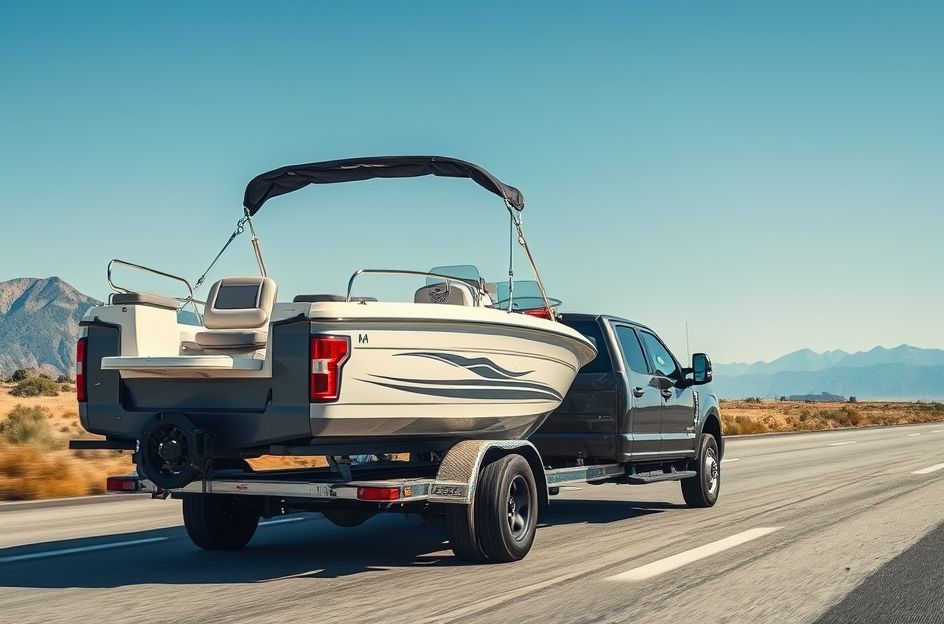
Towing a boat across the United States involves navigating a complex web of state laws. These regulations govern everything from maximum speeds and trailer equipment requirements to trailer dimensions, braking systems, insurance, and essential accessories like reflectors. Furthermore, many states require specific permits for boat towing. Given that a significant portion of the American population resides within close proximity to navigable waterways, boat trailering has become a popular activity.
Statistics indicate that boats under 25 feet in length are the easiest to tow regularly, offering superior maneuverability on highways. Boat-towing vehicles and trailers differ considerably from standard towing setups due to the unique shape and dimensions of boats.
The market offers a diverse range of towable boats, including airboats, fishing boats, bowriders, canoes, cuddy cabins, daysailers, deck boats, sailing dinghies, flats boats, jet boats, and inflatable boats, catering to various boating preferences.
For those less experienced in boat towing, adhering to a comprehensive trailering safety checklist is crucial. This checklist should cover essential aspects such as loading, leveling, driving, unloading, and launching procedures. A common and potentially dangerous issue faced by boat towers is the loosening of nuts on trailer wheels, which can occur over long distances. Therefore, diligent wheel maintenance should be a top priority for all boat trailer owners. As with other forms of towing, each state has its own set of laws governing weight limits, speed restrictions, and minimum equipment requirements. Strict enforcement of these regulations necessitates thorough preparation to avoid potential issues.