
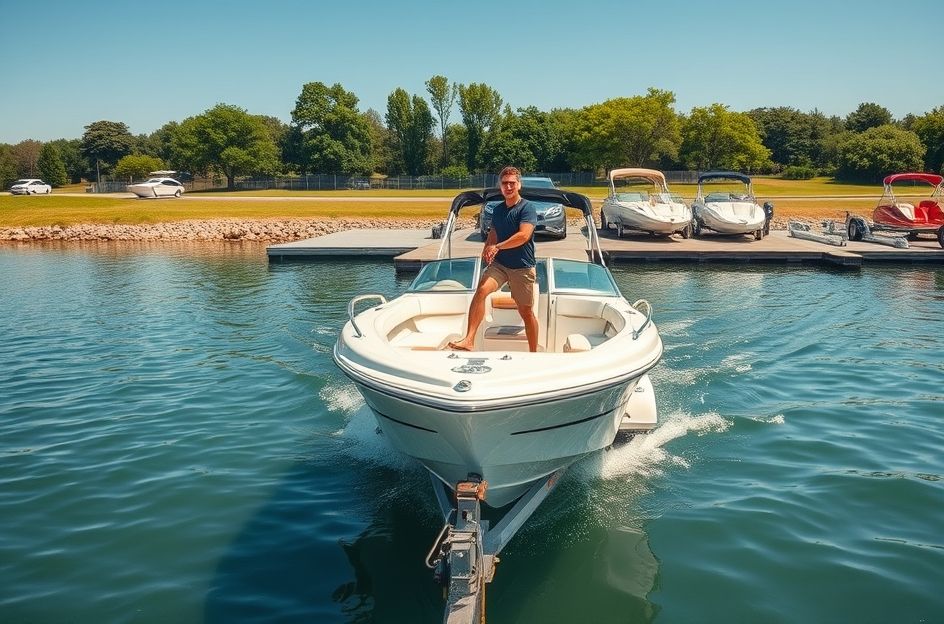
Launching your boat should be a simple and enjoyable process with a bit of practice. If you’re new to boating, practicing reversing your boat trailer in an empty parking lot is highly recommended before heading to the boat ramp. Attempting to launch without knowing how to reverse can lead to frustration and delays for everyone.
Let’s review the fundamentals of reversing a trailer:
Begin with your vehicle and trailer aligned as straight as possible, positioned about one trailer length away from your target area. While reversing slowly, observe the trailer through the driver’s side window and gently turn the steering wheel to the right. Use subtle steering adjustments. It’s easier to increase the steering angle than to overcorrect.
Many guides suggest grasping the steering wheel at the bottom. This technique can help prevent oversteering. If your steering wheel is initially straight, you’ll intuitively know when it’s straight again throughout the maneuver without needing to look.
As soon as the trailer starts turning, begin straightening the wheel while continuing to reverse. Don’t delay straightening, or the trailer could jackknife.
Eventually, you’ll need to steer in the opposite direction while still reversing. Guide the vehicle’s front end to follow the trailer, keeping an eye on the trailer’s position for necessary corrections.
Continue reversing in a straight line, using your side mirrors for guidance. Maintain a slow and controlled pace. When more of the trailer becomes visible in one mirror, steer towards that mirror to guide the trailer in the opposite direction. Remember that only small steering adjustments are necessary.
Pulling forward to realign the trailer is a simple option before resuming the reversing process.
Once you can confidently back up a few hundred feet without jackknifing or hitting anything, you’re likely ready to launch at a boat ramp. If possible, choose a quiet weekday morning for your initial launch.
The most important rule is preparation before approaching the ramp. Ensure all gear is securely stowed, the boat key is in the ignition, the drain plug is in place, tie-down straps are removed, trailer lights are disconnected, and a safety line is attached to the bow. It’s inconsiderate to other boaters to load gear or apply sunscreen while blocking the launch ramp!
Keep the winch strap and safety chain connected until you reach the water’s edge. Disconnecting them just before launching takes only a few seconds.
Back the boat down the ramp, stopping before the boat’s stern extends over the water. Unlock the winch strap and remove any devices securing the outboard motor in the up position. Then, back down until the trailer wheels are submerged.
When the boat is ready to float off, have a partner hold the bowline or secure it to your vehicle or winch handle.
After the boat floats free, either beach it or tie it to the dock using the bowline. An experienced boater will have someone start the engine and move the boat away from the dock, allowing the driver to park the vehicle and board.
Regardless, launch quickly to be courteous to other boaters.
The same principles apply when retrieving your boat, but be mindful of potential hazards, especially if you’re tired or in a hurry.
After docking, have your vehicle keys accessible, retrieve your vehicle, and wait in line.
Before pulling the boat out of the water, ensure the engine is tilted up.
Many launching problems can be avoided by ensuring everything on your boat is in proper working order before leaving home.