
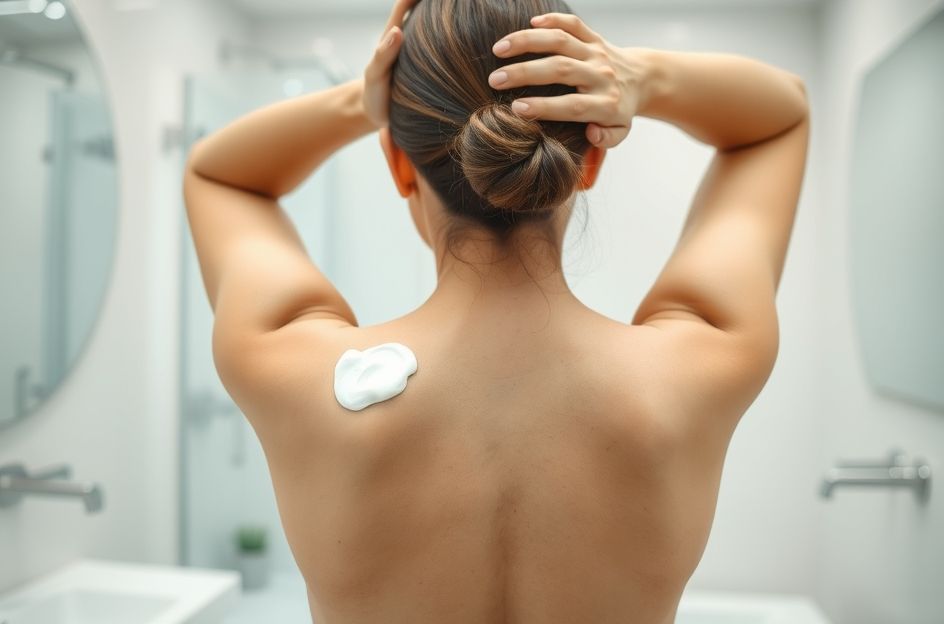
Unlike facial acne, back acne, often called “bacne,” isn’t triggered by one specific cause. Medically, it arises when oil glands become overactive, usually around puberty. Androgens, hormones present in both sexes, can stimulate these glands to produce excess oil. These oil glands reside just beneath the skin’s surface.
Oil glands constantly secrete oil through skin pores. Overproduction can clog these pores and hair follicles, trapping dead skin cells. This mixture of oil and dead cells then attracts bacteria, leading to acne formation.
Bacne can appear anywhere on the body, not just the back, and ranges from mild whiteheads to severe, painful cysts. While some individuals may be more prone to it, other contributing factors include tight clothing or heavy backpacks. However, completely avoiding contact with the back is unrealistic.
Bacne manifests in various forms, including pimples, pustules, and blackheads. It affects people from adolescence into their forties and beyond. Understanding the causes and treatments is crucial for effective management.
Interestingly, bacne differs from facial acne in some ways. It’s generally not genetically inherited, though severe cases might have a genetic component related to body type. People worldwide experience bacne, and unlike some other forms of acne, diet doesn’t directly cause or worsen it. Greasy or high-fat foods aren’t linked to bacne.
Excessive oil production and dirt buildup also aren’t major contributors. Similarly, excessive sweating without immediate washing hasn’t been proven to increase bacne risk. Stress, often linked to facial acne, doesn’t directly cause bacne, although it can hinder healing if it leads to picking and irritation.
Treating bacne is often easier than preventing it. The back’s thicker skin allows for stronger topical treatments, like 10% benzoyl peroxide, which would be too harsh for thinner facial skin. All types of acne – blackheads, whiteheads, papules, pustules, and cysts – can occur on the back.
Over-the-counter medications can address mild breakouts. However, severe cases like cystic acne require a dermatologist’s care. While simple acne might resolve with daily cleansing, cystic acne penetrates deeply and can cause scarring, necessitating professional treatment.
Always consult a healthcare provider before starting any bacne treatment program. Avoid self-treating severe acne with over-the-counter products without professional guidance.