
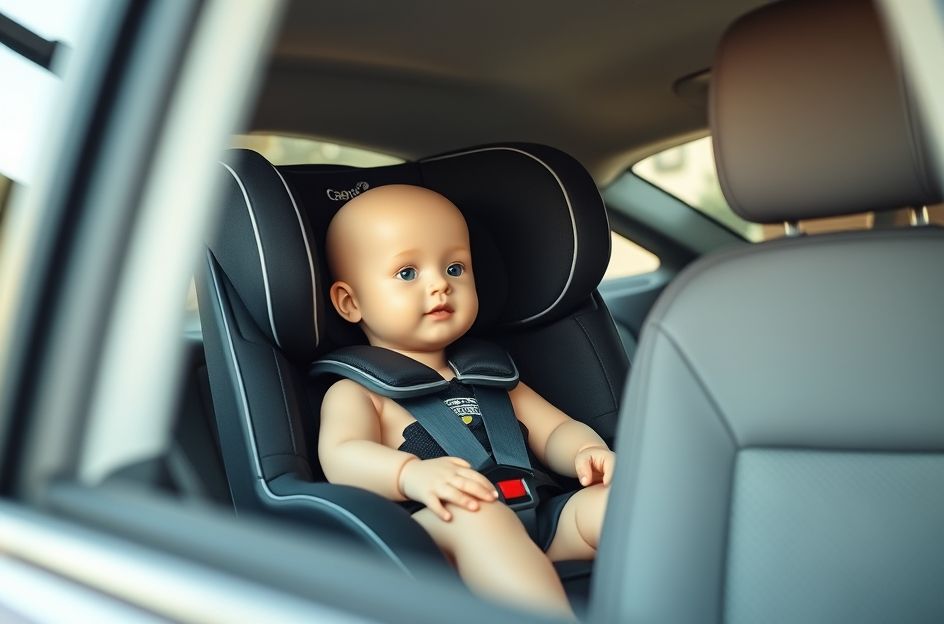
Ensuring your baby’s safety in the car is paramount. This article addresses frequently asked questions about baby car seats to help you make informed decisions.
**Q: What is the best baby car seat?**
The best car seat is one that fits your child’s size and weight, installs easily and correctly in your vehicle, and meets all safety standards. Compatibility with your car is crucial.
**Q: What types of baby car seats are available?**
Several types exist, including infant seats (for newborns and small babies, always rear-facing), convertible seats (transition from rear-facing to forward-facing as the child grows), all-in-one seats, forward-facing seats with harnesses, and booster seats (high-back and backless) for older children. Each type has variations to suit different needs.
**Q: Which is safest: a five-point harness or a shield?**
A five-point harness generally provides superior protection. It secures the child snugly at the shoulders, hips, and between the legs, distributing crash forces effectively. Shields or T-shields may not offer the same level of restraint and could pose a risk of injury.
**Q: How do I safely install my baby’s car seat?**
Always refer to the car seat’s instruction manual and your vehicle’s owner’s manual. If you’re unsure, contact the manufacturer’s customer support or seek assistance from a certified Child Passenger Safety Technician (CPST). Many local fire departments and hospitals also offer car seat installation checks.
**Q: What is the correct way to secure my child in the car seat?**
The method depends on your child’s age, weight, and the car seat type. Infants should be in rear-facing seats until they reach the maximum weight or height limit specified by the seat manufacturer. Forward-facing children should use the harness system correctly, ensuring straps are snug and positioned appropriately. Always use the top tether when installing a forward-facing seat with a tether anchor.
**Q: What is LATCH?**
LATCH (Lower Anchors and Tethers for Children) is a system designed to simplify car seat installation. It uses lower anchors in the vehicle seat and a top tether to secure the car seat, reducing movement in a crash. Not all vehicles or car seats have LATCH; in those cases, use the seatbelt installation method.
**Q: What is a Tether?**
The tether strap connects the top of the car seat to an anchor point in the vehicle, limiting forward head movement during a collision, which significantly reduces the risk of injury.
**Q: When is my child ready to use seat belts without a booster seat?**
A child is typically ready for a seat belt when they are at least 4’9″ tall and between 8 and 12 years old. They must be able to sit with their back against the vehicle seat, knees bent comfortably over the edge, and the lap belt low and snug across the upper thighs. The shoulder belt should cross the middle of their shoulder and chest.
**Q: Can a baby car seat be used safely in an airplane?**
Yes, FAA-approved car seats can be used on airplanes. Check with the airline for specific requirements regarding car seat dimensions and approval labels.
**Q: Is it safe to use a second-hand baby car seat?**
Used car seats can be acceptable, but only if you know their history. Avoid seats that have been in a crash, are expired (check the manufacturer’s label), have missing parts, or show signs of damage. Always obtain the instruction manual.
**Q: What should I do if my baby car seat is recalled?**
Contact the manufacturer immediately. They will provide instructions on how to receive a replacement or repair kit, free of charge.
**Q: Are there baby car seats available for children with special needs?**
Yes, adaptive car seats are available for children with medical or physical needs. Consult with your pediatrician or a child passenger safety technician specializing in special needs to find the appropriate seat.
**Q: What is the best type of harness for my baby car seat?**
Five-point harnesses are considered the safest. Ensure the harness straps fit snugly and are at or below the child’s shoulders when rear-facing and at or above when forward-facing.
**In Conclusion**
Prioritize your child’s safety by choosing the right car seat, installing it correctly, and using it properly every time you travel. Consult the resources mentioned above for additional guidance and updates on car seat safety standards.