
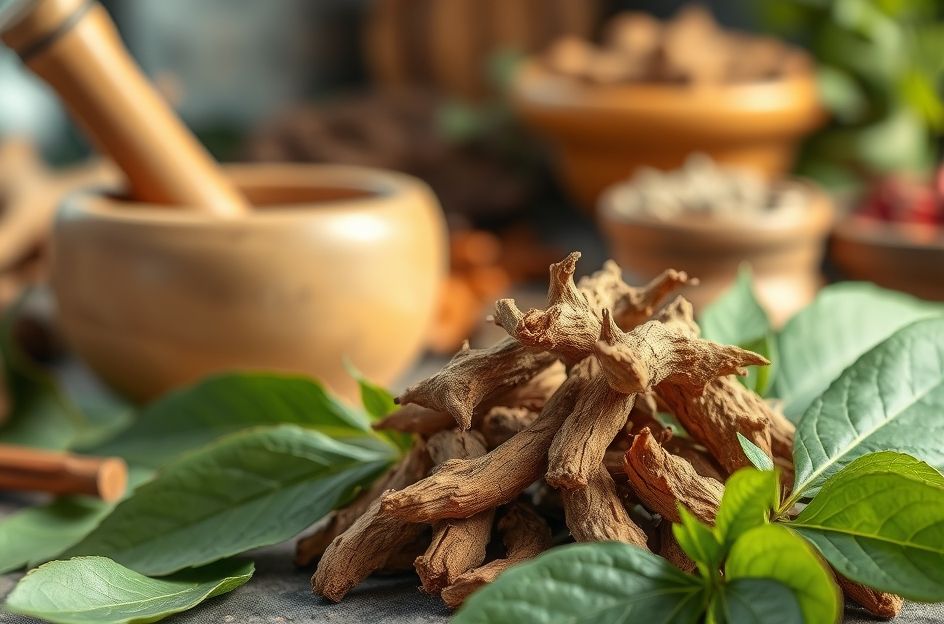
Ashwagandha, scientifically known as Withania somnifera and also referred to as Indian Winter Cherry or Indian Ginseng, is a powerful shrub belonging to the Solanaceae family. Primarily cultivated in western India, including Gujarat, Madhya Pradesh, and Punjab, as well as in the Himalayan regions, this herb has a rich history in Ayurvedic medicine.
The name Ashwagandha is derived from Sanskrit, where ‘Ashwa’ means horse and ‘gandha’ means odor, referring to the distinctive scent of its roots. It’s also known as Varaha karni due to its leaves resembling a pig’s ear.
In Ayurveda, Ashwagandha is characterized by its light and sticky properties, with a taste that is both bitter and sweet. After digestion, the sweet taste predominates. The root is the most frequently utilized part of the plant for medicinal purposes.
The therapeutic benefits of Ashwagandha stem from its unique composition, particularly the presence of withanolides. These compounds contribute to its adaptogenic, rejuvenating, and sedative qualities.
Ashwagandha’s effects on the mind are noteworthy. By balancing Vata and Kapha doshas, it enhances memory, reduces stress, and promotes a calm mental state. Its stress-relieving properties make it beneficial for individuals experiencing insomnia. It may also be helpful in managing Alzheimer’s disease and memory loss.
Beyond its mental health benefits, Ashwagandha strengthens the body and bolsters the immune system. It increases overall energy levels and aids in recovery, making it an excellent herb for convalescing individuals. Its ability to prevent disease relapse is valuable for those with compromised immune systems, including HIV patients.
Ashwagandha possesses anti-inflammatory properties, making it a useful adjunct therapy for arthritis. It can alleviate joint inflammation and improve mobility.
This herb also supports the digestive system by increasing appetite and normalizing digestion and bowel movements.
Ashwagandha is renowned for its positive effects on the reproductive system. It increases sperm count, sperm motility, and libido, earning its reputation as a potent aphrodisiac. It also serves as a uterine tonic and enhances female libido.
As a rasayana, or rejuvenating preparation, Ashwagandha slows down the aging process. It can help reduce hypertension and acts as a diuretic.
During pregnancy, Ashwagandha may be beneficial in preventing habitual and threatened abortions by stabilizing the pregnancy and balancing hormones.
Ashwagandha can be used in various preparations:
* A paste made from Ashwagandha leaves can be applied topically to reduce local inflammation.
* Herbal massage oils containing Ashwagandha can help with paralysis, epilepsy, and insomnia.
* A preparation of Ashwagandha processed with ghee, sugar, and honey serves as an effective aphrodisiac, increasing semen quantity, sperm count, and motility, and addressing erectile dysfunction, low libido, and premature ejaculation.
* Regular use of Ashwagandha roots can improve conditions such as emaciation in children, senile debility, rheumatism, general debility, nervous exhaustion, brain fog, memory loss, low muscular energy, and spermatorrhea. It increases overall energy and vigor and aids in rebuilding the body after chronic illnesses.
* In emaciated children, regular use of Ashwagandha can promote weight gain and increase energy levels.
* Ashwagandha can help reduce blood sugar and cholesterol levels.
* A fine powder of Ashwagandha mixed with oil can be beneficial for various skin conditions.
* Ashwagandha can also act as a galactagogue, increasing and thickening milk production in nursing mothers.