
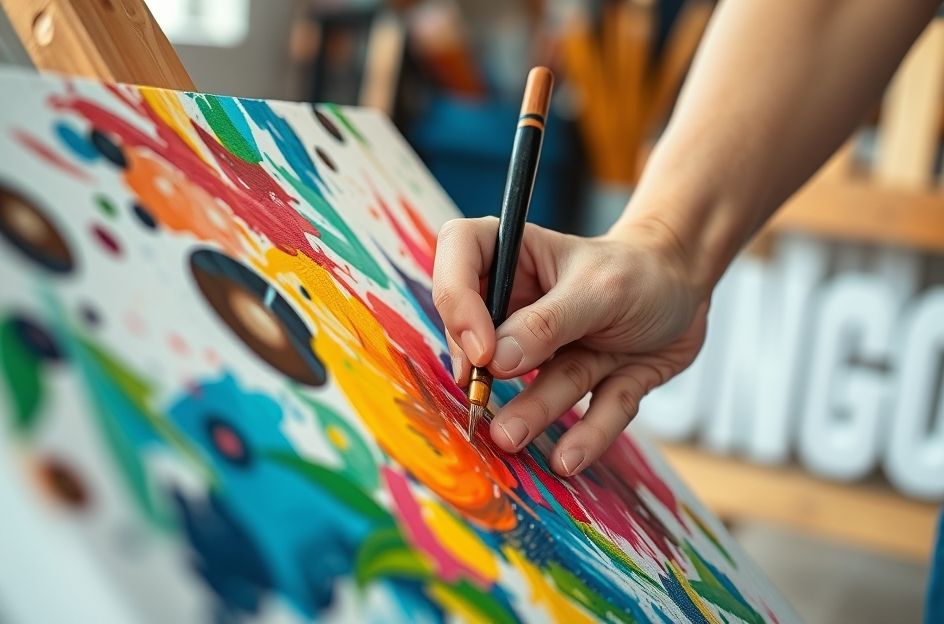
Acrylic paints are prized for their rapid drying times, low odor, and versatility, making them ideal for decorative projects. This guide offers essential tips for beginners eager to explore the world of acrylic painting.
**Essential Acrylic Painting Supplies**
Invest in a variety of brush sizes to handle different painting needs. A palette, whether a traditional tray or a stay-wet option, is crucial for holding your paints. Other useful tools include palette knives for mixing, fan brushes for blending, and even toothbrushes for unique textures. Always have ample practice materials like paper or canvas for initial sketches and experimentation.
**Managing Acrylic Drying Time**
Acrylics dry extremely quickly, often in just minutes. To prevent paint from drying out, dispense small amounts at a time. Consider using a stay-wet palette or spritzing your regular palette with water to maintain paint consistency.
**Blending Acrylic Colors Effectively**
Blending acrylics can be challenging due to their fast-drying nature. Several techniques can help: pre-mix colors and store them in tubes or containers, use a wet palette for blending, apply small dots of different shades and overlap them, or layer shades instead of blending while wet.
**Choosing Quality Acrylic Paints**
While inexpensive acrylics might be tempting for practice, invest in artist-grade paints for your final pieces. Cheap paints are prone to fading, especially lighter shades like pink and violet, when exposed to sunlight.
**Using Sketches as a Foundation**
Begin with pre-drawn sketches to guide your painting. Transfer your sketch onto your canvas or board and then apply a thin layer of acrylic paint to prime the surface, ensuring the sketch remains visible. Alternatively, prime the surface with white paint before transferring your sketch.
**Layering with Masking Fluid**
Watercolor masking fluid is excellent for layering colors or preserving specific areas of your painting. Apply the fluid to the areas you want to protect and remove it completely once dry by gently rolling it off with clean fingers. Dedicate a specific brush for masking fluid to avoid damaging your regular brushes.
**Learning from Master Acrylic Painters**
Study the works of accomplished acrylic artists to gain insights and learn new techniques. Explore the styles of artists like Donna Dewberry (known for the One Stroke technique) and Priscilla Hauser (a pioneer in decorative painting). Discover techniques such as Trompe L’oeil to incorporate into wall murals and other decorative projects.
With imagination and these practical tips, you can create stunning decorative acrylic art that will bring joy for years to come.