
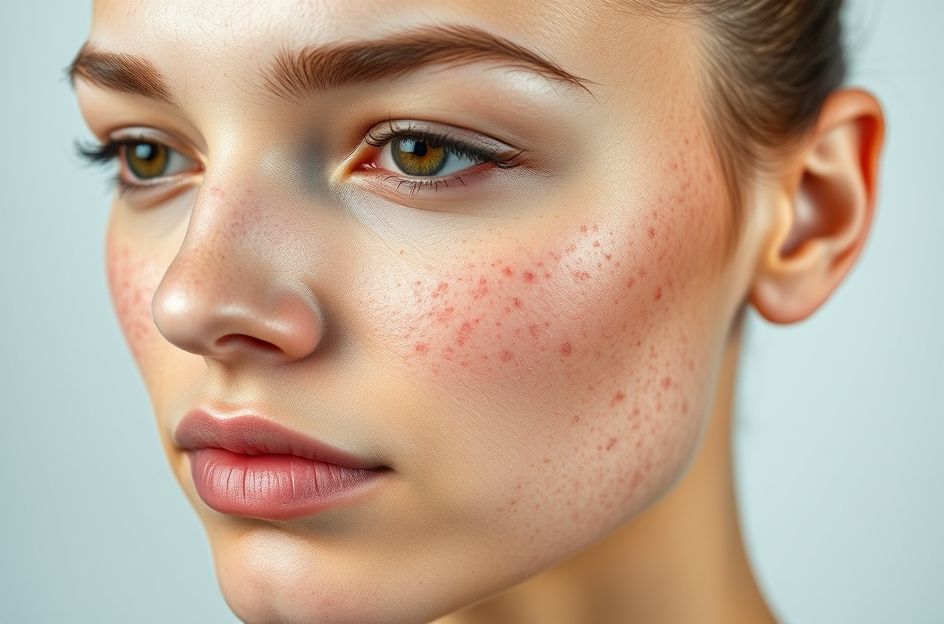
Acne manifests in various forms, each with distinct characteristics and requiring tailored treatment approaches. While the underlying process of pimple formation is similar, the resulting appearance and individual reactions can differ significantly. Acne arises when a hair follicle becomes clogged, leading to the formation of a comedo. As the follicle becomes increasingly blocked by oil, the comedo expands, causing inflammation in the surrounding skin and the development of a pimple.
Non-inflammatory acne includes closed comedones, or whiteheads. These occur when a plugged hair follicle remains beneath the skin’s surface, appearing as small, whitish bumps.
Open comedones, or blackheads, develop when the plug enlarges and pushes through the skin. The dark color isn’t due to dirt but rather the accumulation of melanin, the skin’s pigment. Blackheads are also considered a type of non-inflammatory acne.
A mild form of inflammatory acne is a papule, characterized by a small, firm, pink bump on the skin’s surface. These bumps can be tender and are often seen as a transitional stage between non-inflammatory and inflammatory acne.
Pustules resemble papules as small, round lesions, but they are visibly inflamed and contain pus. They may appear red at the base with a yellowish or whitish center. While pustules don’t typically harbor significant bacteria, they are inflamed due to chemical irritation from sebum components.
Nodular or cystic acne is a painful condition involving inflamed, pus-filled lesions deep within the skin. These nodules develop when the contents of a comedo spill into the surrounding skin, triggering an immune response and pus formation. Severe cases can persist for weeks or months, potentially hardening into cysts and often leaving deep scars.
Acne conglobata, a rare and severe form of inflammatory acne, primarily affects the back, buttocks, and chest. It is characterized by pustules and nodules, and can lead to severe bacterial infections.
Acne cosmetica is a mild form triggered by topical cosmetic products. It manifests as small pink bumps and localized inflammation on the cheeks, chin, and forehead. Development may occur over weeks or months, and it typically doesn’t cause scarring. Identifying and eliminating the causative topical products is crucial.
Understanding the specific type of acne is essential for determining the most effective treatment strategy. Identifying the origin of the problem is the first step toward finding a solution.