
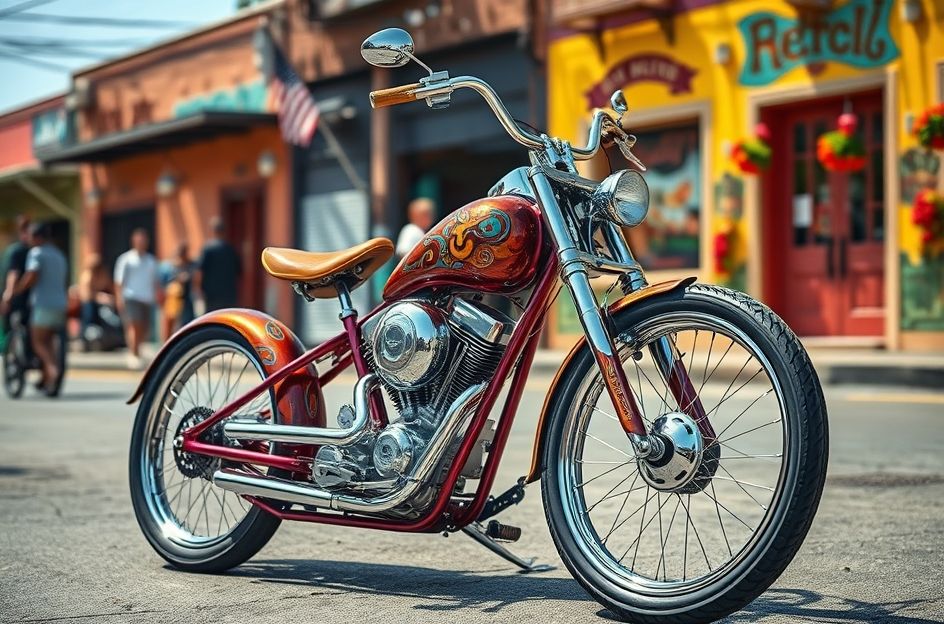
Lowrider bikes emerged from the Chicano culture, deeply rooted in the street life of American barrios where Mexican immigrants cultivated a vibrant urban environment. These bikes, a unique fusion of Harley-Davidson aesthetics and cruiser bike comfort, are adorned with elaborate paint jobs, gleaming chrome, and colorful streamers, making them a spectacle in any parade.
True to their name, lowrider bikes ride close to the ground. Typically, the handlebars sit the highest, reminiscent of their motorized counterparts. The seat is positioned near wheel level, and surprisingly, the pedals can be higher than the seat itself. These bikes are often highly personalized creations, reflecting the individuality of their owners. While standard and more elaborate models can be found in specialty bike shops, particularly in the American West, most are labors of love.
Despite their origins in areas of economic hardship, lowrider bikes are far from inexpensive. Their creators view them as both works of art and mechanical marvels, not just modes of transport. The joy lies in showcasing them, transforming streets into galleries. Each component is carefully chosen for both its functionality and aesthetic appeal, resulting in a stunning display of technical and artistic ingenuity.
Lowrider bikes are gaining popularity in more cities, perhaps finding broader acceptance thanks to the rise of recumbent bicycles. As baby boomers seek more comfortable alternatives to traditional road bikes, the demand for both lowrider and recumbent models is expected to grow.
Once you own a lowrider bike, the urge to customize it is irresistible. You might find yourself browsing catalogs, envisioning how a golden sprocket would enhance your ride. Lowrider bikes encourage creative embellishment and technical innovation, appealing to the artist and inventor within us all.
Ultimately, what could be more appealing, especially for an avid cyclist?