
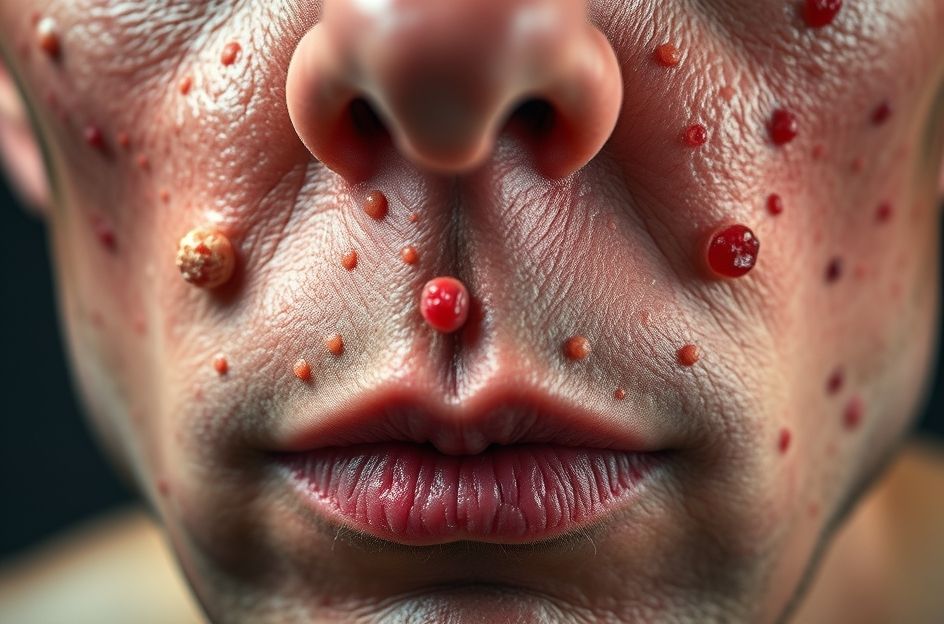
While most people associate acne with the occasional pimple, severe forms can lead to significant physical and emotional scarring. Although transient acne is common, particularly during adolescence, some individuals experience far more debilitating conditions that persist into adulthood.
Modern living, with its associated stresses and environmental pollutants, contributes to the rise of adult acne. Understanding the most serious forms of acne is crucial for effective management and treatment.
Acne Conglobata (AC) is a rare, severe form characterized by interconnected abscesses, deep burrowing sinus tracts in the skin, papules, and significant scarring (both keloidal and atrophic). Clusters of blemishes, often containing pus-filled cysts and nodules, commonly appear on the face, back, and chest. AC disproportionately affects males, typically beginning between 18 and 30 years old. While the exact cause remains unknown, a genetic component involving XXY karyotype chromosomes is suspected. The disfigurement caused by AC can lead to profound self-esteem issues, depression, and anxiety.
Acne Fulminans (AF), initially mistaken for AC, presents with a sudden onset of ulcerating acne accompanied by fever and polyarthritis symptoms. Unlike typical acne, AF responds poorly to conventional antibacterial treatments. Successful management usually involves debridement combined with steroid therapy. AF is linked to a compromised immune system and elevated levels of testosterone and anabolic steroids, which increase sebum production and the proliferation of Propionibacterium acnes (P. acnes) bacteria. Some evidence suggests isotretinoin may trigger AF eruptions.
Differentiating between AC and AF can be challenging. AF is generally more painful, with patients reporting bone pain, facial pain, migraines, and fever. Treatment strategies also differ; AC may respond to standard topical and oral anti-acne medications, while AF requires steroid-based interventions.
Gram-Negative Folliculitis is a bacterial infection caused by gram-negative bacteria, often developing after prolonged antibiotic use. Unlike regular acne (acne vulgaris), gram-negative folliculitis typically presents with fewer papules and comedones. Identifying gram-negative bacteria relies on a staining process in laboratories; gram-negative bacteria do not retain the blue stain. Common culprits include E. coli, Serratia marcescens, Pseudomonas aeruginosa, and Proteus and Klebsiella species. Fortunately, gram-negative folliculitis is often easier to treat than other severe acne forms, responding well to conventional antibiotic therapy and, in some cases, isotretinoin.