
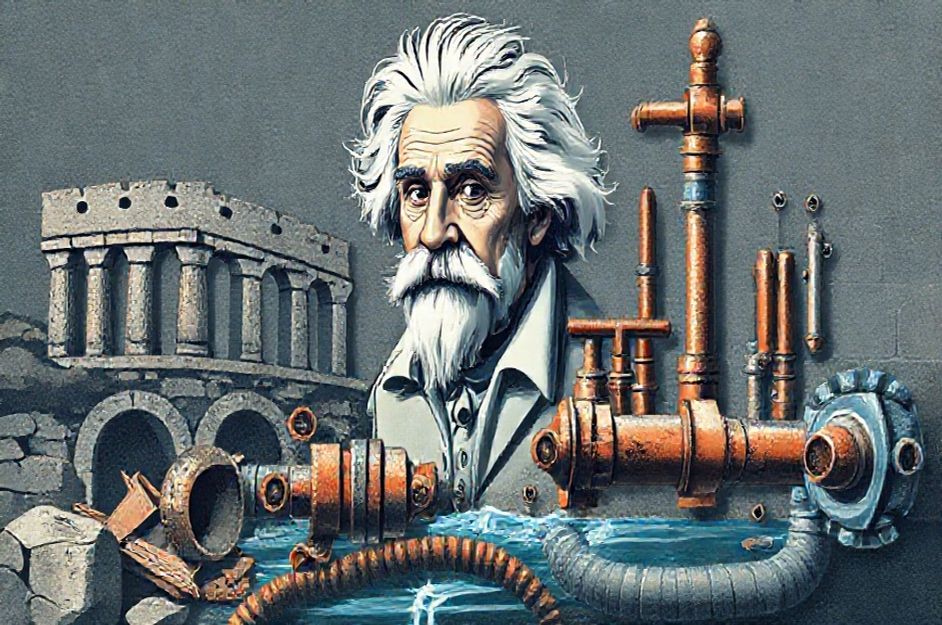
Plumbers are essential for installing and maintaining our water systems. Like electricians, they require licensing from trade or vocational schools, possessing expertise in industrial, domestic, and communal pipework. Their skills encompass water heating (including steam and gas fitting), water treatment (cleaning and purification), drainage, sewer networking, water flow dynamics, water storage, temperature regulation, and understanding water-related hazards.
The term “plumber” originates from the Latin word “plumbum,” meaning “lead.” This is because ancient Romans used lead pipes extensively. Therefore, the name reflects the primary material they once worked with.
Interestingly, Albert Einstein, a giant in modern mathematics, held plumbers in high regard. He famously stated:
“If I were a young man again and had to decide how to make my living, I would not try to become a scientist or scholar or teacher. I would rather choose to be a plumber in the hope to find that modest degree of independence still available under present circumstances.” – Albert Einstein, The Reporter, 18 November 1954.
Shortly after this quote was published, Einstein was made an honorary member of the Plumbers and Steamfitters Union, A.F.L., in Washington D.C., effectively making him an honorary plumber. Einstein appreciated this recognition, even though he wasn’t actively seeking praise. While he was renowned for solving complex mathematical problems, he also recognized the critical importance of skilled tradespeople who ensure access to clean water.
Plumbers are often unsung heroes. They perform demanding jobs that require crucial knowledge about water, a fundamental necessity for civilization and human survival. They ensure we have safe drinking water and clean water for hygiene, truly acting as lifesavers.