
Shipping containers, typically 20’x8’x8′ or larger, are essential for global trade, transporting goods from heavy machinery to consumer products. Their standardized dimensions facilitate efficient transfer between trucks, trains, and ships, significantly improving transport logistics.
However, the cost of transporting empty containers is uneconomical. While ideally, they are reused for outgoing shipments, trade imbalances often lead to an accumulation of empty containers at major import destinations. This creates logistical challenges and sparks the need for innovative repurposing solutions.
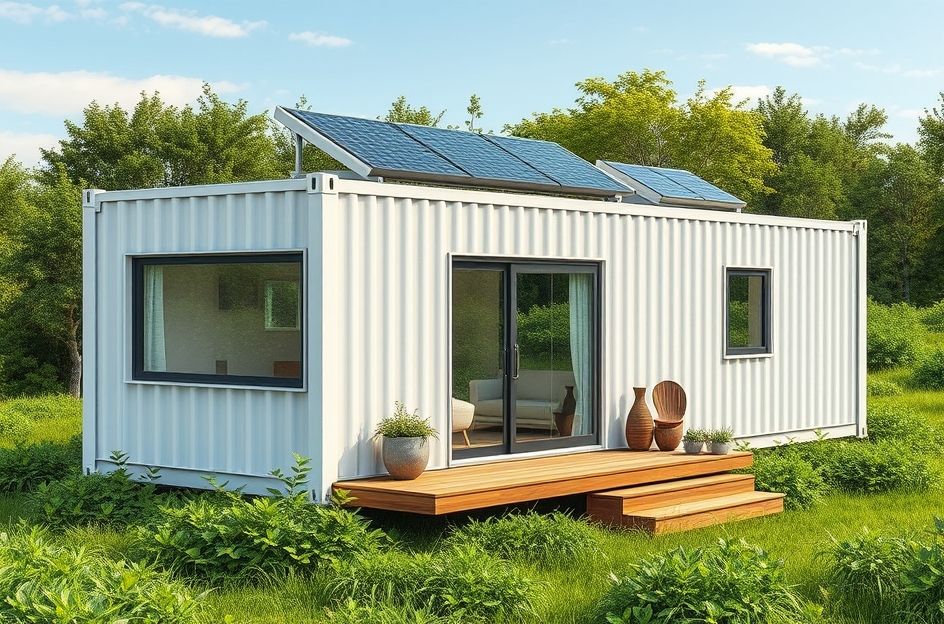
**Container Houses:** A standard container can be transformed into a compact living space, accommodating a living area, fold-away bed, and basic amenities. Larger containers offer more spacious layouts. Insulation, customized windows, and doors can enhance livability. With solar power integration, these container homes can even be mobile.
These designs can also be adapted into mobile shops, eateries, or other functional spaces. Containers can be stacked to create multi-level structures.
**Flat Racks:** By removing the walls and roof while retaining the corner reinforcements and floor plate, containers can be converted into flat racks. These are suitable for various purposes. Adding wheels allows for easy movement along tracks, simplifying cargo handling and loading.
Empty flat racks can be stacked for efficient storage and transport.
**Garbage Containers:** Surplus containers can be repurposed into robust garbage containers. Their structure allows for easy transport on container trucks and handling with standard equipment. The waste can be tightly packed and easily removed via the container’s door.
**Open Top Containers:** For oversized or heavy cargo, open-top containers provide easy loading via crane. This eliminates the challenges of conventional loading methods.
**Specialized Containers:** Beyond these examples, various specialized containers exist, including tank containers for liquids, refrigerated containers for perishables, and ventilated containers for organic produce. Smaller containers cater to air cargo needs, showcasing the versatility of container design.