
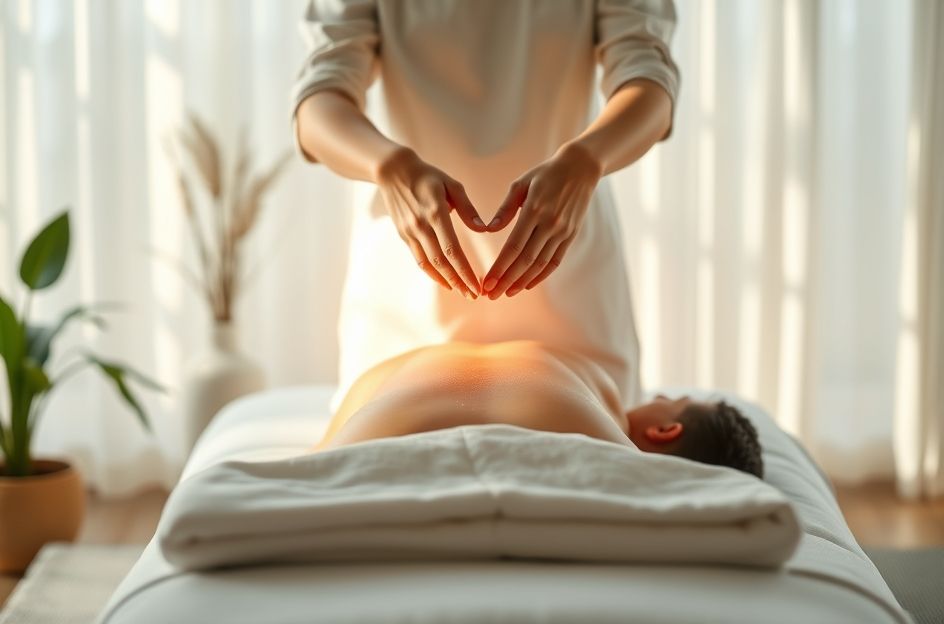
When seeking massage therapy, most individuals anticipate a hands-on approach involving the use of hands, fingers, and elbows to relieve muscle tension. A skilled massage therapist can effectively target areas of discomfort, providing significant relief. I recall a physical therapy session where the therapist’s focused pressure on a problematic area near my shoulder blade alleviated persistent neck, back, and arm pain stemming from a pinched nerve.
Recently, Reiki has garnered attention as a potential therapeutic option, often appearing in massage therapy curricula. However, its inclusion raises questions regarding its alignment with traditional massage principles. Unlike massage, which involves the manipulation of soft tissues for therapeutic purposes, Reiki adopts a distinct approach.
Reiki, similar to Shiatsu, aims to balance the body’s “ki” or “life force energy.” According to ancient Oriental philosophy, imbalances or depletion of this energy can lead to physical and emotional ailments. Reiki practitioners channel energy to clients, seeking to restore balance and promote healing. Crucially, Reiki may not involve any physical manipulation. In some instances, treatment doesn’t even require physical contact. This discrepancy clashes with the conventional definition of massage.
Dr. Mikao Usui, a minister and head of a Christian school in Japan, developed the modern practice of Reiki. Driven by his students’ inquiries about Jesus’ healing methods, Usui embarked on a quest to understand these practices. His studies led him to a 21-day fast, culminating in a revelatory experience that unveiled the methods he sought. Subsequently, he established a healing ministry, sharing his knowledge with others who propagated the practice.
Reiki operates on the principle of transferring energy from practitioner to patient, empowering the patient in their healing journey. The realignment and balancing of energy is intended to restore harmony within the body. While not a religion, Reiki incorporates spirituality, acknowledging a Universal Life Force as the source of all life energy. Although guided by specific principles, its methods bear resemblance to the “laying on of hands” practiced in various religious traditions. However, this differs substantially from the manipulation of soft tissue that defines massage.
One major challenge is the struggle of massage therapy to gain recognition within the medical community as a legitimate form of therapy. While readily accepted under the umbrella of physical therapy for muscular rehabilitation, massage therapy faces skepticism, with some viewing it as a mix of mainstream medicine, alternative practices, and even questionable elements. The core issue lies in the desire to encompass any healing method involving touch under the umbrella of massage, leading to confusion and skepticism.
Critics often dismiss Reiki as a placebo effect, where patients feel better due to expectation. Concerns also arise regarding the “energy exchange,” typically monetary, between practitioner and patient, a core tenet of Reiki established by its founder, Dr. Usui.
The question of whether Reiki practitioners should be licensed as massage therapists remains contentious. Many dispute this classification, emphasizing the fundamental differences between Reiki and massage. Reiki’s identity remains complex. While offered in massage schools, many practitioners do not identify as massage therapists. Determining Reiki’s true effectiveness is a matter of debate, however, its categorization as massage remains questionable, potentially requiring a manipulation of the definition to justify its inclusion.