
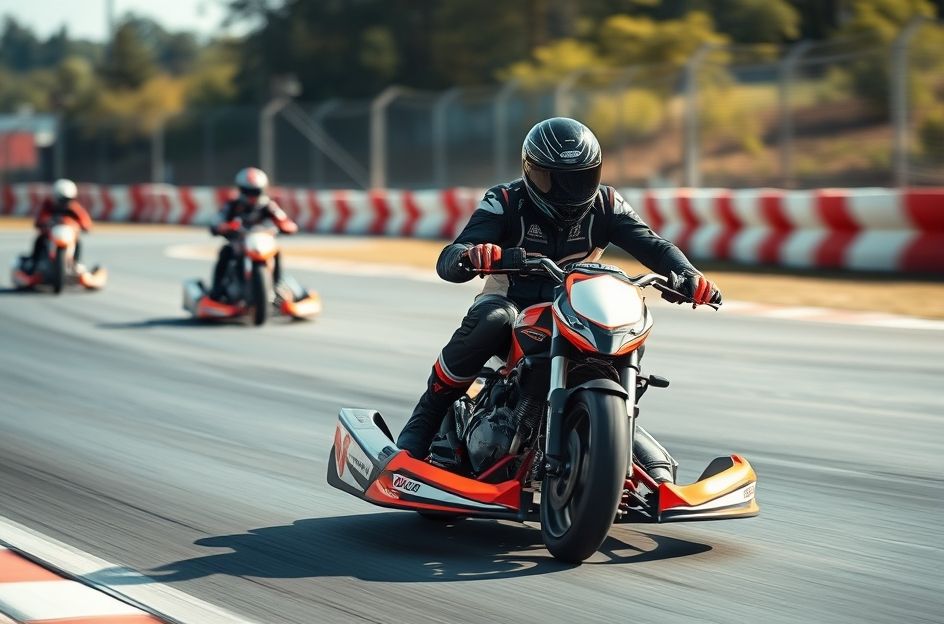
Pocket bike racing, also known as Minimoto or Mini GP racing, utilizes miniature racing motorcycles called pocket bikes on kart tracks. This popular sport thrives in Japan and Europe, and is rapidly gaining traction worldwide, especially in the United States.
A typical pocket bike is approximately one-quarter the size of a standard motorcycle. These bikes are powered by 40-50cc internal combustion engines, producing between 3 and 15 horsepower depending on the model. Lacking suspension systems, pocket bikes rely on their tires for shock absorption and cornering. Most weigh around 40 pounds. Entry-level models generate about 3-4 horsepower, while high-end racing models boast significantly more power. The best racing pocket bikes offer a high power-to-weight ratio, and performance enhancements are frequently implemented to boost speed and acceleration. Despite their small stature, both adults and children race pocket bikes in organized leagues, reaching speeds up to 60 miles per hour.
Pocket bikes are easily transportable and relatively inexpensive. Prices range from around $200 for basic Chinese models to upwards of $5,000 for top-tier Italian versions, making them an accessible way for children (as young as six) to learn motorcycle racing fundamentals. They also allow adults to experience the adrenaline rush of bike racing without the expenses and risks associated with full-sized motorcycles.
In many countries, a license isn’t required to operate miniature bikes. However, pocket bikes are generally not street legal and should only be ridden on private property, such as parking lots, gardens, or racetracks. Some regions have strict laws prohibiting pocket bike use on public streets due to their small size and the risk of being unseen by car and truck drivers. Therefore, they should never be operated on busy public roads.