
In industrial machinery powered by compressed air, pneumatic cylinders drive essential processes. When an air valve activates, compressed air rapidly expands, causing the cylinder piston to move quickly. While speed might seem beneficial, controlling the cylinder’s pace is often crucial to prevent damage and ensure smooth operation.
One way to manage air cylinder speed involves installing flow controls in the air lines between the valve and the cylinder. However, some individuals mistakenly use needle valves to regulate airflow, believing they can throttle the air entering and exiting the cylinder. This approach is flawed because needle valves restrict flow equally in both directions.
Consider a large cylinder: restricting incoming air prevents a smooth stroke. As pressure gradually builds, it eventually overcomes friction, causing the piston to lurch forward. This movement increases the cylinder volume behind the piston, requiring a rapid influx of air to maintain consistent motion. If the air supply can’t keep pace with the expanding volume, pressure drops, the piston stalls, and any connected tooling also stops. This start-stop motion is inefficient and can damage equipment.
The key to proper air cylinder speed control is to only restrict exhaust air. Inlet air should always flow freely.
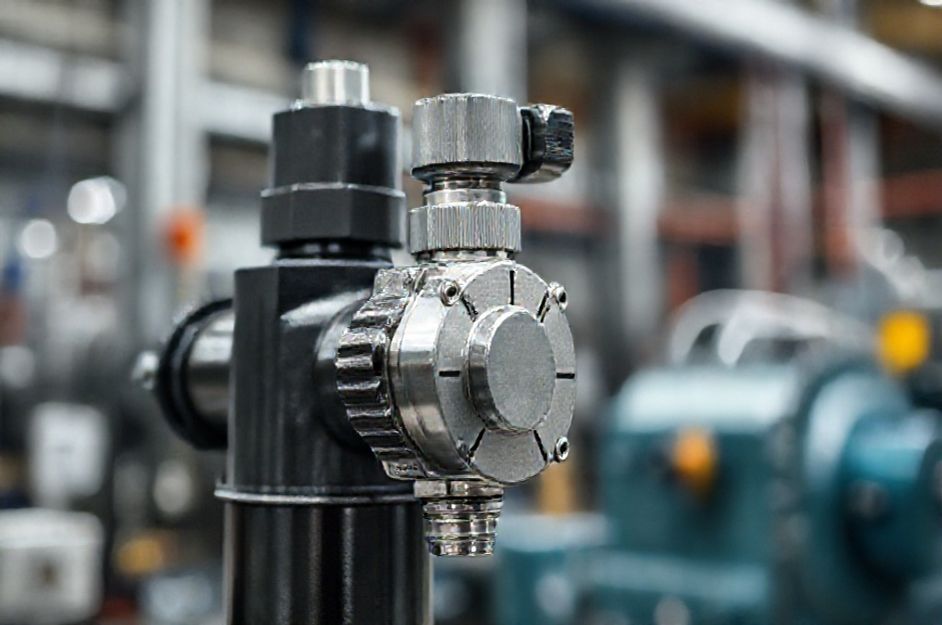
This is achieved using a cylinder flow control valve. While visually similar to a needle valve, a cylinder flow control incorporates an internal bypass. This bypass allows unrestricted airflow in one direction, ensuring a full, uninhibited rush of air into the cylinder. When the valve reverses and air exhausts from the cylinder, the flow control restricts the outflow to achieve the desired speed. A second flow control on the opposing line operates identically.
With this setup, air rushes into the cylinder unimpeded, providing maximum force. The piston attempts to move quickly at full power, but the restricted exhaust airflow governs the overall speed, resulting in controlled and powerful movement.
Most cylinder flow controls feature a schematic indicating proper installation. Many also include sealant-coated threads for direct port mounting and instant-type fittings for rapid air line connections, saving time and resources.