
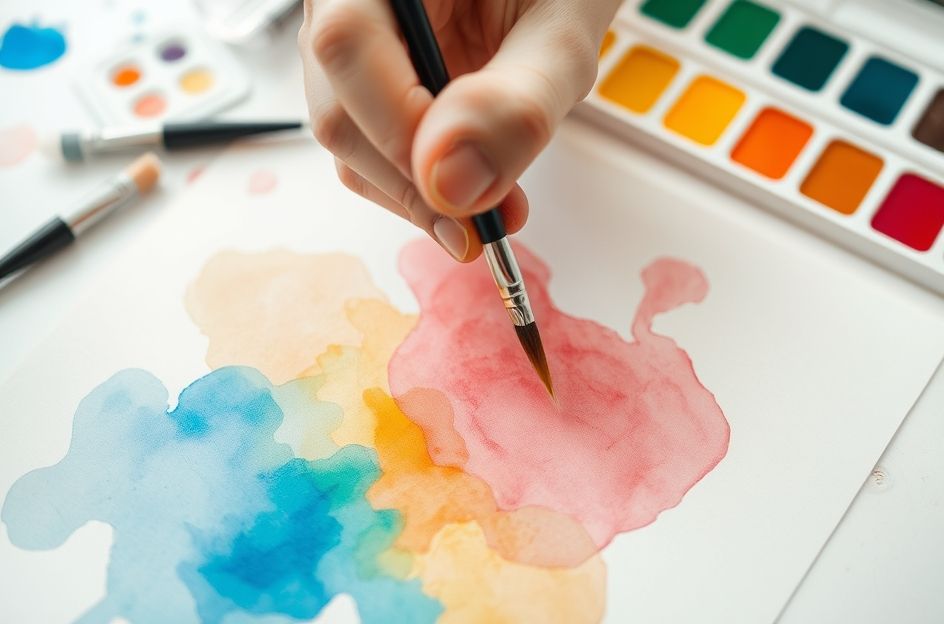
Watercolor painting offers a unique avenue for artistic expression, especially favored by beginners. To elevate your watercolor skills, explore these essential techniques.
**Washing:** Begin by wetting the paper area you intend to cover. Mix sufficient pigment to fill the space, then apply it from top to bottom, overlapping horizontal bands. Allow the wash to dry undisturbed for even results.
**Dropping In Color:** Introduce a new color to a wet area of your painting, allowing it to bleed naturally without intervention. This yields unpredictable yet fascinating color gradations.
**Glazing:** Similar to washing, glazing involves applying a thin pigment layer, but onto a dry surface over existing washes. Use it to fine-tune tone and color, applying layers until the desired effect is achieved. Ensure each layer dries completely before adding the next. Transparent pigments like aureolin, cobalt blue, and permanent rose work well for glazing.
**Wet-on-Wet:** Load your brush with very wet pigment and apply it to dampened paper, even over dried washes. This technique creates soft, subtle marks ideal for backgrounds.
**Dry Brush:** The antithesis of wet-on-wet, dry brush involves using minimal water with your pigment. Drag the brush across dry paper for crisp marks with hard edges. It excels in foregrounds and focal points.
**Lifting Off:** After the pigment has dried, re-wet the specific area and use a tissue to blot and lift the color. Be aware that reds, yellows, and blues can be more stubborn to lift.