
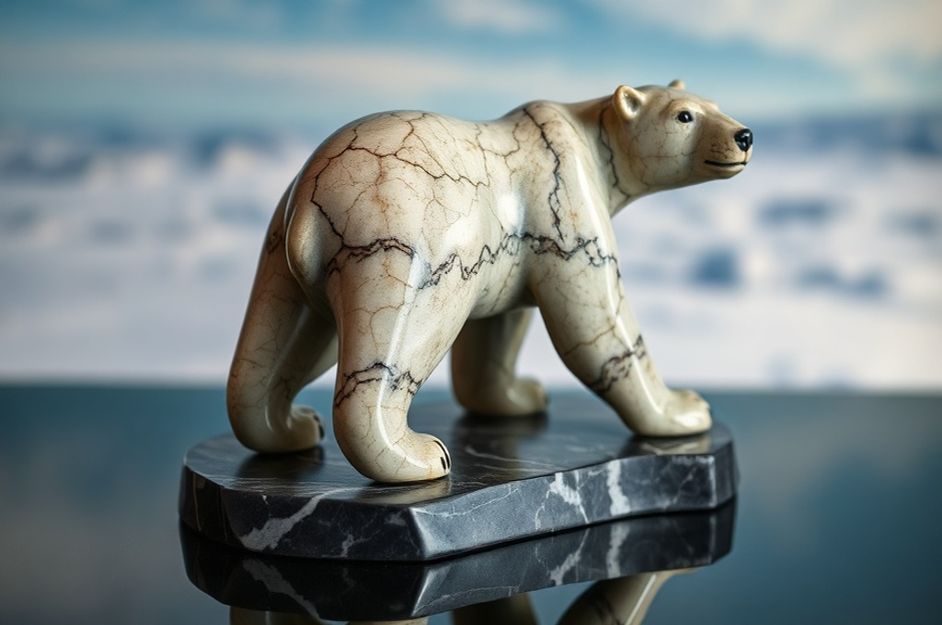
The import and export of Inuit art, particularly sculptures incorporating materials like ivory and whalebone, are subject to specific regulations, especially between Canada and the United States. The Marine Mammal Protection Act (MMPA), enacted in 1972 and amended in 1981, restricts the trade of marine mammal products to protect vulnerable species. A key provision, Section 101, exempts Alaskan Natives, allowing them to continue traditional hunting and the use of marine mammal parts for sustenance, clothing, crafts, and art.
Under the MMPA, American citizens cannot import ivory or whalebone from outside the United States. This means that purchasing Inuit art containing these materials from Canada and bringing it into the US is prohibited. However, the law allows Americans to buy similar artwork within Alaska. Conversely, exporting marine mammal artwork from the United States to Canada is also restricted.
Specifically, Inuit sculptures featuring whalebone, walrus tusks, or narwhal tusks (all classified as ivory) face import and export limitations. Sculptures made with caribou antler are generally permitted, as caribou are not marine mammals and therefore not covered by the MMPA.
Exporting Inuit sculptures with whalebone or ivory from Canada to other countries is governed by the destination country’s regulations. Violations of import and export laws can result in substantial fines and penalties. Other forms of Inuit art, such as stone carvings, antler carvings, and prints, are typically duty-free and can be freely exported.